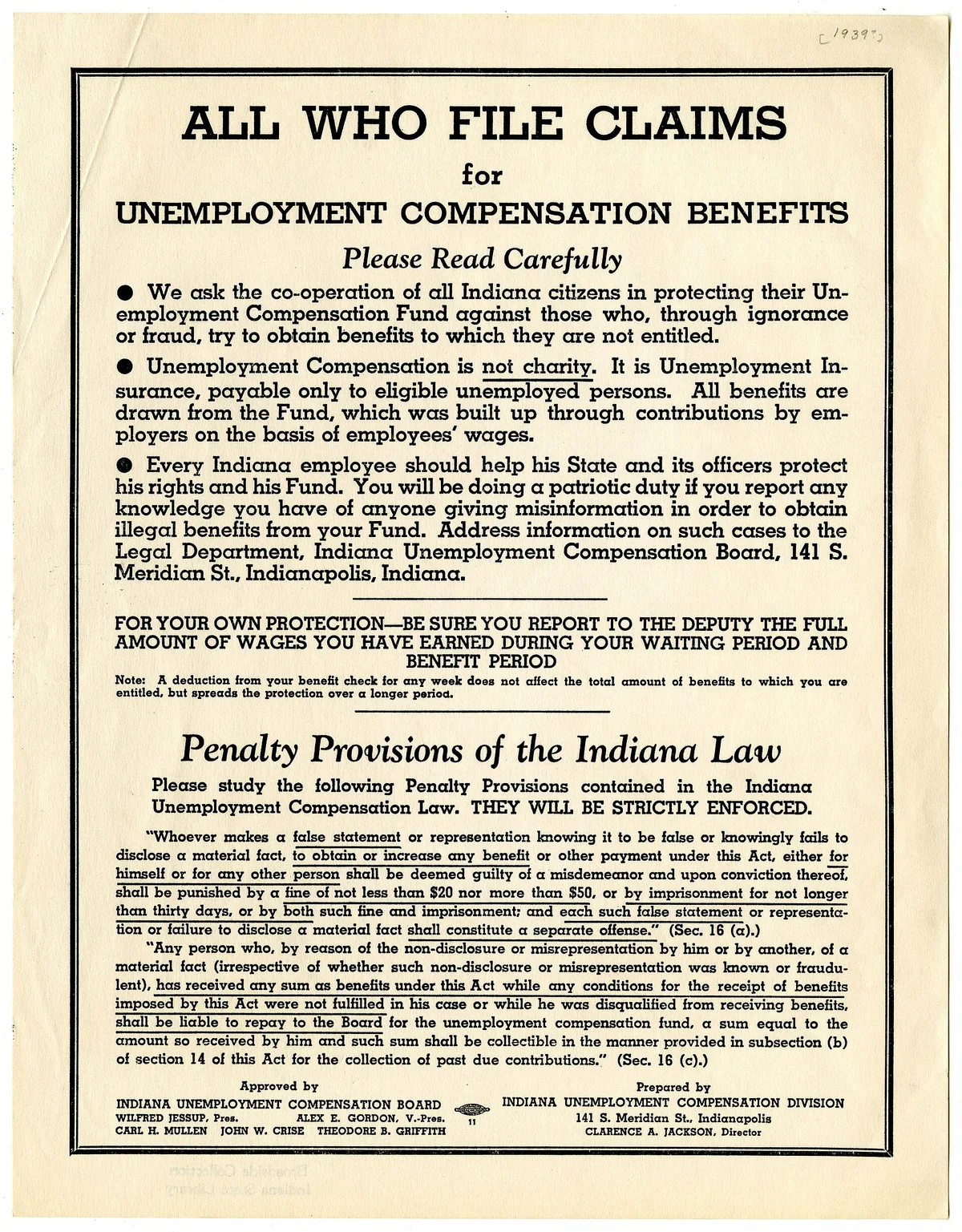
A layoff raises an immediate money question: what replaces the paycheck? The answer is unemployment benefits, a state-run insurance program that pays a weekly amount for a limited number of weeks. The payment is almost never the full wage. It is a fraction of recent earnings, capped by each state, and it lasts only while the worker meets the program's active-search rules.
How much a person receives depends on where they worked, because each state sets its own formula. Some states replace roughly half of a worker's prior wages up to a cap; others replace much less. The duration also varies by state. In a labor market like Missouri's, where the unemployment rate stood at 3.6 percent in September 2026, according to the Bureau of Labor Statistics, most claimants are navigating the standard state system rather than any emergency extension.
This explainer walks through the four things that determine the check: eligibility, the benefit formula, waiting periods, and the reasons claims get denied. It also covers what to do when the state says no. For the health-insurance side of a layoff, see our companion piece on what COBRA actually guarantees. This connects to our earlier piece, What COBRA Actually Guarantees After a Layoff: The Fine Print Behind the 18-Month Rule.
Who qualifies for unemployment benefits?
Unemployment insurance is not a general assistance program. It is insurance funded by employer payroll taxes, and it covers people who lose work through no fault of their own. A worker generally qualifies on three fronts. First, they must have earned enough over a recent 12-month period, called the base period, to meet the state's minimum. Second, the separation must qualify: a layoff or lack of work almost always does, while a firing for misconduct usually does not. Third, the worker must be able to work, available to work, and actively looking.
Quitting is the complicated case. A resignation is typically denied unless the worker left for good cause connected to the work, such as unsafe conditions or a material change in the job. States define that phrase differently, and outcomes turn on documentation. The practical point: the reason for separation, as the employer reports it and as the worker can document it, drives the decision.
Part-time and partial employment do not automatically disqualify a claim. Many states allow reduced benefits for workers whose hours were cut, and some provide tools to estimate those partial amounts. Missouri's Department of Labor, for example, offers a partial benefits calculator alongside its standard one, so claimants can estimate what reduced hours would pay.
How is the weekly check calculated?
Every state looks back at wages earned during the base period and applies a formula. The most common structure takes the highest-earning quarter of that period, applies a percentage, and divides by the number of weeks in the quarter. The result is a weekly benefit amount, subject to a state minimum and maximum.
What this means in practice is that two workers doing the same job in different states can receive very different checks. The replacement rate, the cap, and the number of weeks available are all state choices. A worker in a low-cap state may find the maximum benefit covers a much smaller share of their rent than the same maximum does in a high-benefit state.
The check is also taxable income. States report benefits to the federal government on Form 1099-G, and claimants can view and print that form through their state portal. In Missouri, that happens through the UInteract system, per the Department of Labor and Industrial Relations. Workers who did not elect tax withholding during the year can face an unexpected bill in April, which is worth planning for before the checks start.
Why does the first payment take so long?
Most states impose a waiting week before benefits begin. The claimant files, meets the eligibility tests, and then serves one unpaid week at the start of the claim. The week still counts toward the benefit year; it simply does not pay. Some states have waived this rule during recessions, but in normal times the waiting week is standard, and it is a common reason a new claimant sees nothing for the first week or two.
Processing adds its own delay. The state contacts the former employer, who can contest the reason for separation. If the employer's account differs from the claimant's, a adjudicator reviews the record before any money moves. Filing promptly and accurately, with dates and documentation in hand, shortens this stage.
Why do claims get denied?
Denials cluster around a handful of reasons:
- Insufficient wages. The base period does not show enough earnings, often because the worker started the job recently or had a gap.
- Misconduct or quit without good cause. The employer disputes the separation, and the state sides with the employer on the record presented.
- Not meeting search requirements. Claimants must document a set number of work-search contacts each week. Missing or unverifiable contacts stop payments.
- Unreported earnings. Working part-time while claiming, and not reporting it, is treated as fraud. States ask claimants to report all earnings in the week earned, not the week paid, and Missouri's labor department maintains a dedicated line for reporting unemployment fraud.
- Missed appointments or paperwork. Failing a scheduled interview or an identity-verification request can freeze a claim until it is resolved.
One more trap deserves its own note: identity theft. Fraudsters file claims using stolen personal data, and victims often learn of it when a notice arrives for a job they never held. Reporting it quickly to the state matters, because a fraudulent claim can complicate a genuine one filed later.
What happens if the state says no?
A denial is not the end of the process. Every state runs an appeal system, and the deadlines are short, often measured in days from the date of the determination. In Missouri, appeals go to the Division of Employment Security Appeals Tribunal, an independent body, and claimants can file by mail or by phone, according to the department's unemployed workers page. The hearing is typically by telephone, both sides present their account, and the outcome can restore benefits retroactively if the appeal succeeds.
Our analysis of how these cases tend to break: documentation decides them. A written warning, a text message about scheduling, a layoff notice with a date, anything contemporaneous beats a recollection. Claimants who appeal with a folder of records fare better than those who appeal with a story.
The bottom line for workers planning around a layoff
Unemployment benefits are a bridge, not a substitute salary. The reliable expectations are these: the check replaces a fraction of prior wages, it is capped and time-limited by the state, the first week is often unpaid, and the money is taxable. The reliable actions are equally plain. File as soon as the layoff is confirmed, report every dollar earned while claiming, keep a log of work-search contacts, and appeal a denial within the deadline if the record supports it.
Where the check falls short, the gap usually has to be closed by other means: savings, a working spouse's income, a quick return to partial work, or reduced spending. The program was built to cushion a short spell between jobs in a tight labor market, and it performs that role as designed. Workers who treat it as a full income replacement, or who miss a filing requirement, are the ones who end up with nothing. For related coverage, see Retail Theft: The Gap Between Viral and Inventory.