When workers walk out, headlines pile up fast: picket lines, vote counts, days lost. Most readers come away with a vague sense that something big happened, but not what any of it means. This guide explains the three moments that matter in strike actions — the strike vote, the picket line, and the ratification vote — and what each one tells you about where a dispute stands.
The key qualification is this: a strike does not start when workers get angry, and it does not end when a deal is announced. It starts with a formal vote and ends with a second, separate vote. Everything in between is negotiation pressure, and reading it well means knowing which signals are procedural and which are theater.
What does the word "read" actually ask of you?
Interpreting strike coverage is an act of interpretation in the plain sense. According to Cambridge Dictionary, to read is to look at something carefully so as to understand its meaning — and to interpret the significance of gestures, movements and signals. A picket line is exactly that kind of signal. It carries information, but not always the information it appears to carry, which is why the procedural steps behind it matter more than the imagery.
Who votes to strike, and what does that vote mean?
In most organized workplaces, a union cannot simply call a walkout. Members vote on whether to authorize one. That authorization vote usually happens before or during contract negotiations, and it gives bargaining leaders the legal mandate to call a strike if talks fail. It is a permission slip, not a schedule.
What this means for readers: an authorization vote tells you a dispute is serious, but not that a strike is coming. Many authorized strikes never happen, because the threat itself moves the employer's position. Coverage of a lopsided authorization vote is coverage of leverage, not of empty desks.
Watch for two things in the reporting of any strike vote. First, turnout — a mandate backed by a small share of eligible voters is a weaker mandate, whatever the percentage in favor. Second, the unit — which workers are covered by the contract and which are not. A "strike vote" that covers one shift, one plant, or one job classification is a much narrower event than the headline suggests.
What does a picket line actually signal?
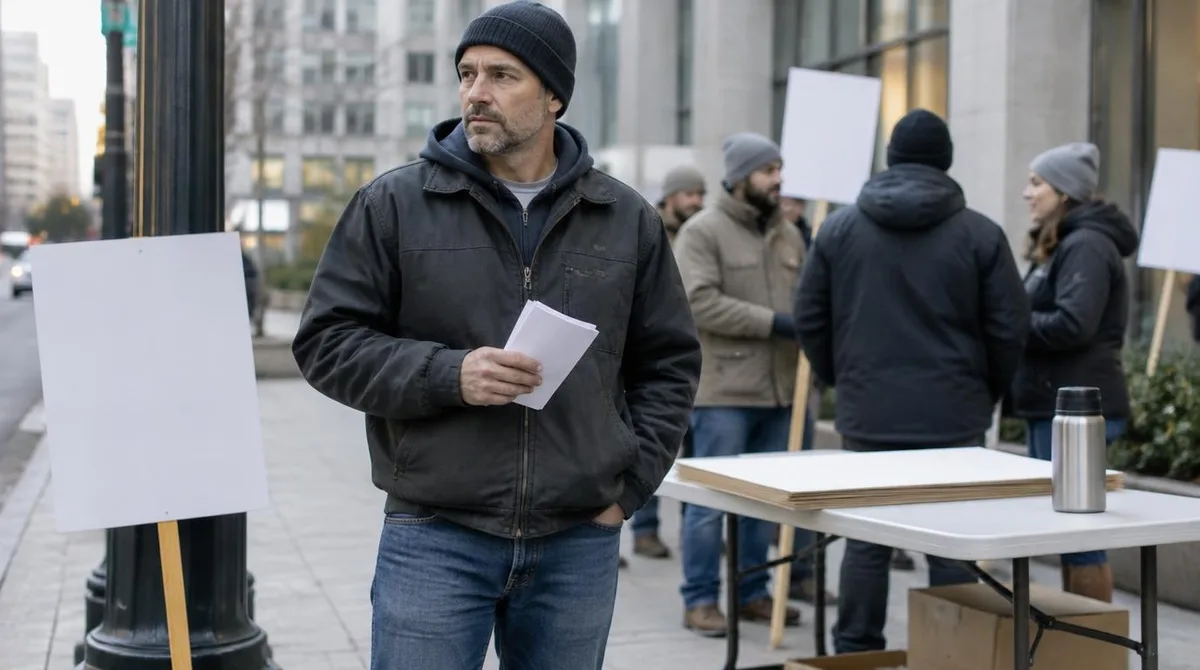
A picket line is workers standing outside their workplace, publicizing the dispute and asking others not to cross. Its core function is informational and persuasive. It tells the public a contract dispute exists, and it asks delivery drivers, customers, and other workers to honor it.
But the size and mood of a picket line are loose signals at best. Lines thin out over time as workers rotate, take other work, or lose stamina. Some picketed sites see most of the workforce out; others are symbolic, with a handful of pickets while most workers stay away through other means. Neither pattern tells you much about the state of bargaining. The reliable signals are procedural: whether talks are scheduled, whether a mediator is involved, and whether either side has publicly moved its position.
There is also a legal dimension worth noting in general terms. Rules governing picketing — where a line may stand, what pickets may say, and how other workers may respond — vary by jurisdiction and by the legal framework covering the workers. Coverage that treats a picket line as purely a moral spectacle misses that half of the story, and coverage that treats it as purely legal misses the human one.
Why does a ratification vote end the dispute, not the announcement?
This is the step most readers miss. When negotiators reach a tentative agreement, the dispute is not over. The proposed contract goes back to the members for a ratification vote — a yes-or-no decision on whether to accept the terms and return to work. Until that vote passes, the strike can continue, and deals announced with fanfare have collapsed at exactly this stage.
Reading a ratification vote follows the same logic as reading a strike vote. A close result signals a membership still unhappy, and a contract that may be hard to administer. A rejected first offer followed by a revised one is common; a rejection that sends workers back to the picket line means the leverage game resumes. The practical rule: no story about a strike is finished until the members have voted, and the honest stories say so explicitly. This connects to our earlier piece, What COBRA Actually Guarantees After a Layoff: The Fine Print Behind the 18-Month Rule.
What do the numbers in strike coverage mean — and what don't they mean?
Strike reporting leans on a few recurring figures. Days lost measure duration, not intensity. Participation counts measure how many workers are out, but they shift daily and are often contested between union and employer. Vote percentages measure internal support, but only among those who voted. None of these numbers, on its own, tells you who is winning.
Our analysis: the most useful question to ask of any strike story is not "how big is the picket line?" but "what has changed in the positions?" If the employer's offer has moved, if the union has trimmed its demands, if a mediator has entered — those are the markers of a dispute moving toward resolution. Pickets and vote counts are the frame. The movement between positions is the picture.
It also helps to remember what a strike costs each side. Workers forgo pay and often face uncertainty about their jobs; employers lose output and, in service businesses, customers. Both sides are spending leverage they cannot replenish indefinitely. That is why most disputes settle — and why the last days before a settlement often look quieter than the first ones.
Practical steps for following the next dispute
Readers who want to track a labor dispute without getting misled can do a few simple things:
- Identify the unit: whose contract, covering which workplaces and job classifications.
- Note the two votes: when the strike was authorized, and whether a ratification vote has been scheduled.
- Track position changes: has either side's stated offer or demand moved since the walkout began?
- Treat picket imagery as atmosphere, not data.
- Wait for the ratification result before treating any deal as done.
For readers following the wider economy of work — how people are paid, protected, and replaced when employment changes — our work coverage and our society-news section follow these questions continuously, including what happens to workers' benefits when employment is disrupted, as our explainer on what unemployment insurance actually pays after a layoff sets out. Readers following this should also see Unemployment Benefits: What Unemployment Insurance Actually Pays After a Layoff.
What the record establishes, and what it doesn't
The evidence in any strike story is procedural: a vote, a walkout, a picket, a second vote. Those steps are consistent across disputes, and knowing them lets any reader separate the durable facts from the daily noise. What no single day's coverage establishes is who will prevail — that is settled, in the end, by the members' ratification vote and by the contract they approve. Read the signals, but weight the procedure.