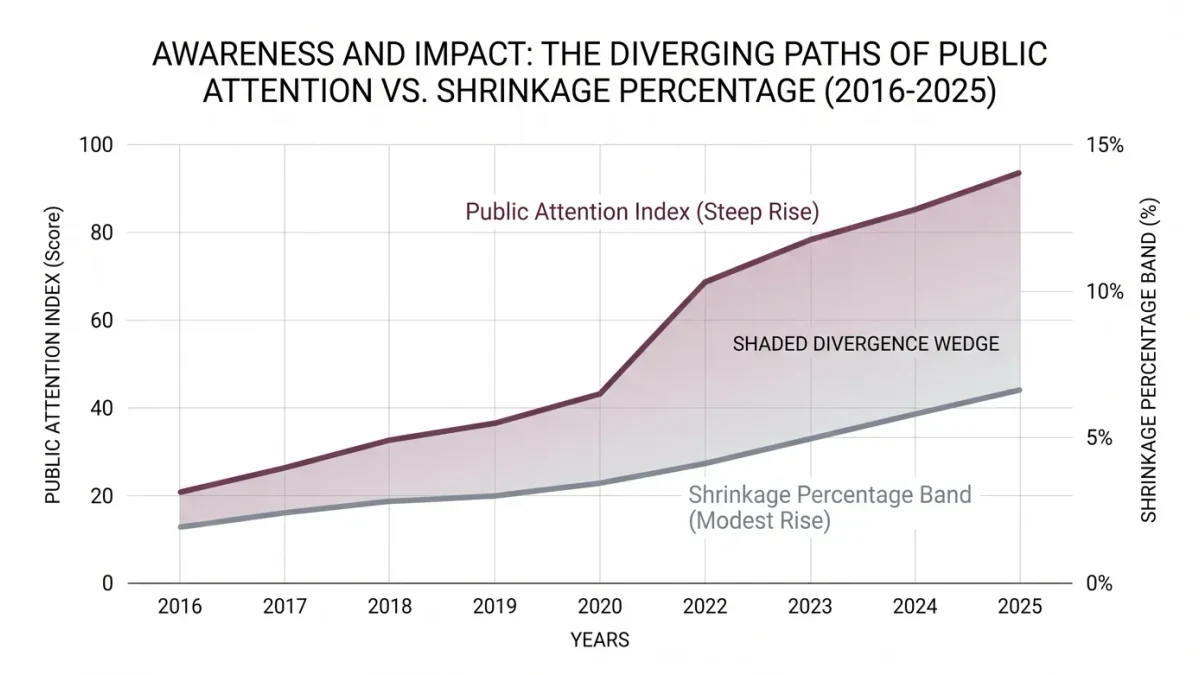
American retail spent 2023 and 2024 in a moral panic about theft, closing stores, locking up deodorant, and testifying in state capitols, and then, quietly, several of the largest chains told investors the panic had overshot. The documented record resolves into a precise shape: shrinkage, the inventory-loss line retailers report, rose from roughly 1.4 percent of sales pre-pandemic to near two percent, a real and costly increase, while the crime-wave framing, viral smash-and-grab footage plus headline closures, ran well ahead of what the filings supported, and several chains, including the drugstore and hardware giants that had blamed theft for closures, walked the claims back in earnings calls and securities disclosures.
What does the data actually show?
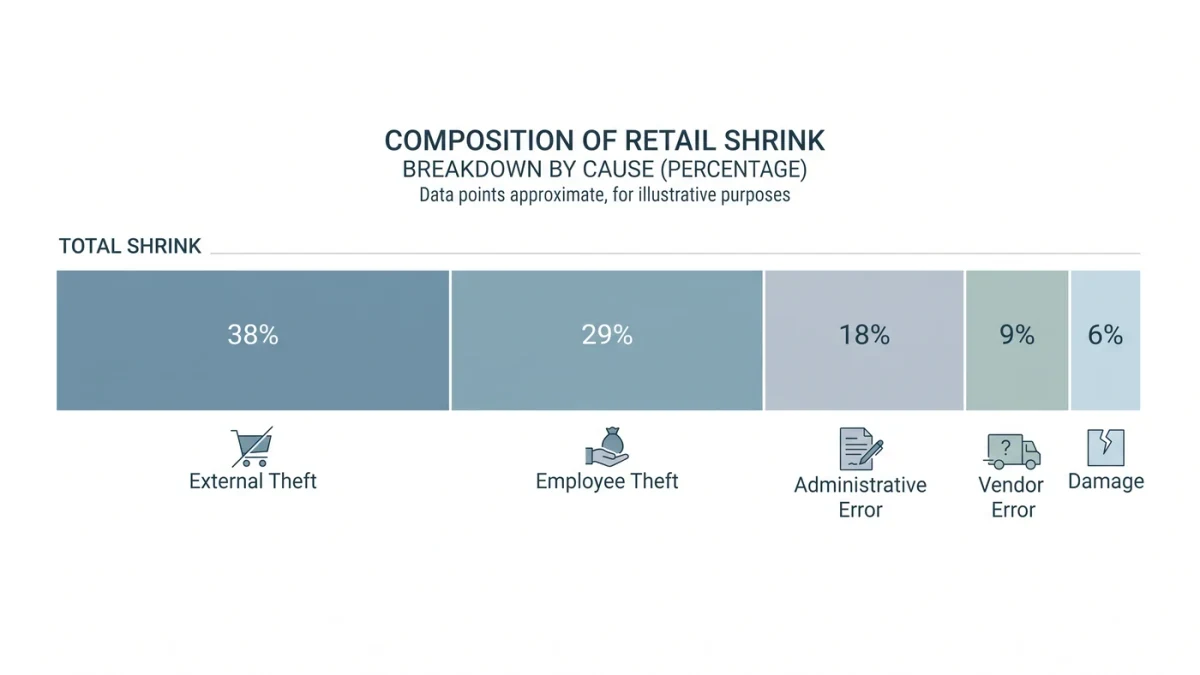
The measurable series are shrinkage estimates from the industry's own surveys, roughly $100 billion at peak years including all causes, employee theft, vendor fraud, administrative error, and shoplifting together, plus crime statistics for commercial robbery and larceny from the FBI's collections, which rose unevenly by city. Two facts discipline the debate. First, shrinkage as a share of sales stayed in a band, under two percent, that retailers have absorbed for decades, and the Council on Criminal Justice's city-level studies of shoplifting documented concentrated spikes in a few West Coast cities, not a national wave. Second, organized retail crime, the ORC framing behind federal legislation, is real but hard to count, and the industry's estimates are self-reported and politically deployed, a limitation the National Retail Federation acknowledged when it retracted a widely cited claim that organized crime drove roughly half of shrinkage.
Why did the narrative outrun the numbers?
The documented incentives are layered. Pandemic-era store congestion and self-checkout, whose documented loss rates exceed staffed lanes, raised genuine shrink. Video of flash-mob thefts, statistically marginal, dominated attention economics. And for specific chains, theft made a convenient public explanation for closures whose disclosed drivers were leases, oversupply, and the shift to online, a substitution documented when reporters compared closure statements with the companies' own securities filings, and confirmed when one drugstore chain told California regulators that its widely publicized theft-driven closures were not, in fact, driven by theft, a correction that ended in a securities-fraud settlement over the whole episode.
What did the policy response do?
State legislatures moved fastest. Prop 36 in California, passed in 2024, rolled back parts of the state's theft-reform Prop 47, recategorizing repeat shoplifting and serial low-value theft as felonies, and a documented wave of states increased penalties or created organized-retail-crime statutes. The evaluations are early, but the first studies of theft-reform rollbacks document mixed effects: small measured declines in reported shoplifting in some cities, no measurable change in others, and documented costs, including jail population increases in counties that can least afford them. The federal Combating Organized Retail Crime Act, reintroduced across sessions, has not become law.
What is actually reducing loss?
The documented operational fixes outperform the criminal-justice ones. Self-checkout restrictions and removals, documented in chain announcements, cut losses directly. Locked cases cut theft and, retailers also document, cut sales, since customers abandon aisles. Receipt-gated exits, employee staffing increases in high-loss departments, and civil-demand enforcement, the letters demanding statutory penalties from suspected shoplifters, whose aggressive use by private law firms generated its own documented abuse scandal, each carry trade-offs the loss-prevention literature quantifies. The humblest lever is staffing: the documented correlation between understaffing and shrink is among the strongest in the operational data, an awkward finding for an industry that spent the same period cutting floor staff.
How to read the next theft headline
Ask which number is being cited, and whose inventory it is. Shrinkage includes error and employees; crime statistics include neither; and closure announcements include strategic retrenchment wearing a crime costume. The honest summary of the record: theft rose, it hurt thin-margin stores in specific places, the wave was inflated by actors with other stories to tell, and the policy dial was turned harder than the evidence justified.