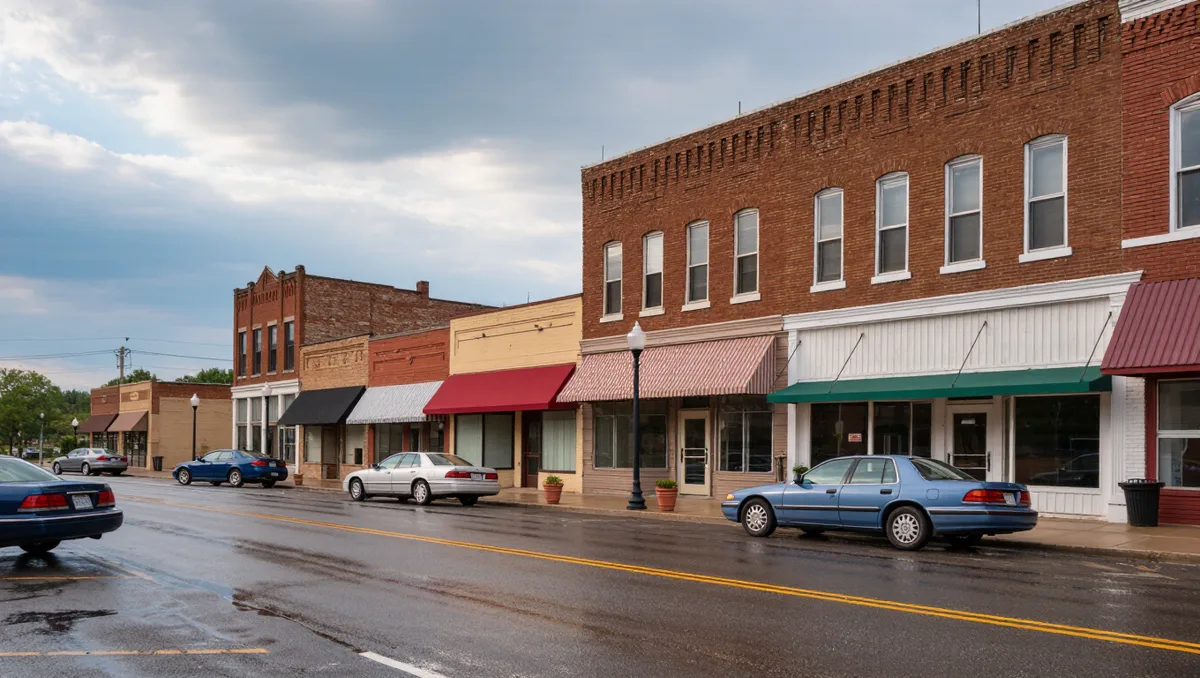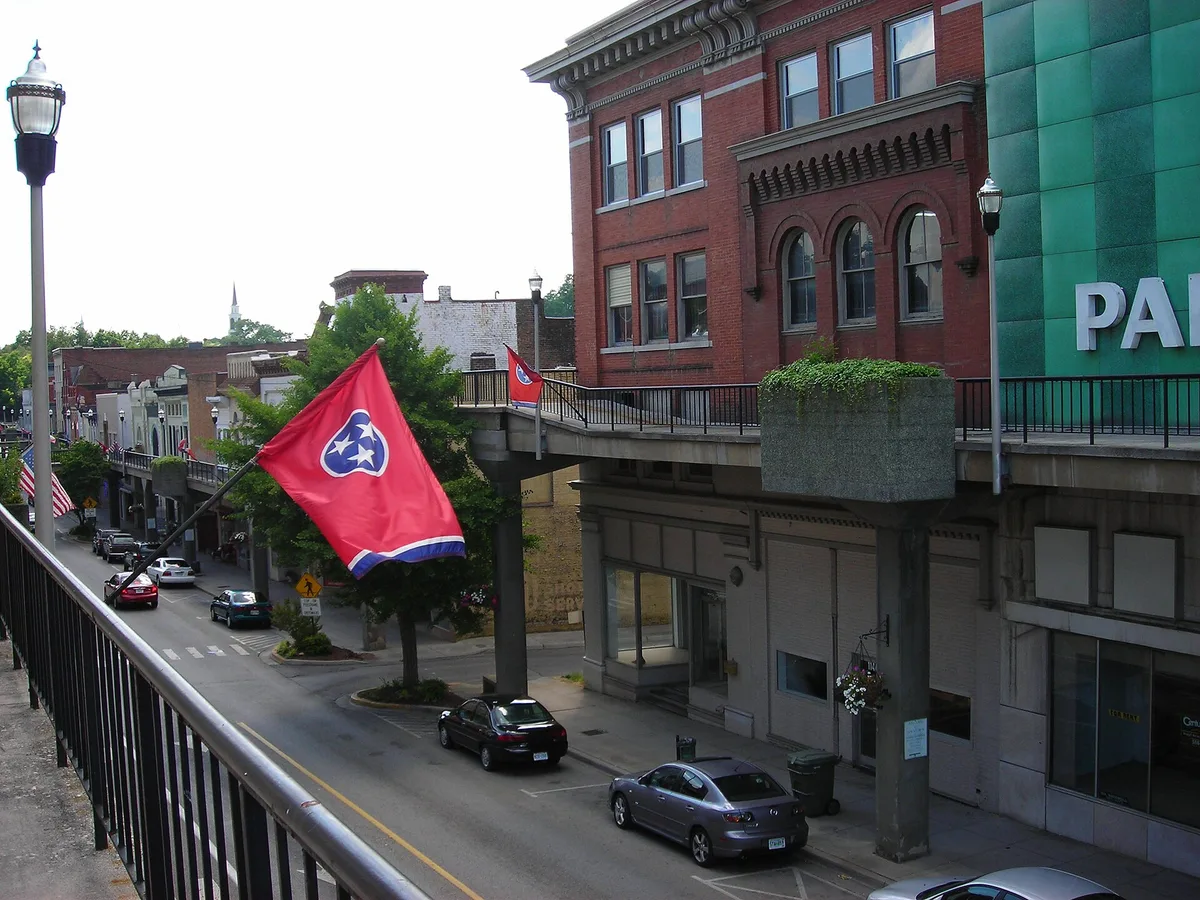
Revitalizing main street works when a town fixes the physical street first, then fills the empty buildings behind it. The order matters. A banner campaign cannot rescue a corridor where the sidewalks crumble, half the storefronts sit dark, and parking rules punish anyone who lingers.
The towns that succeed tend to run the same playbook, in roughly the same sequence. They walk the block and count what is actually there. They fix lighting, crossings, and facades before they chase new tenants. They put housing upstairs. And they measure results in open shutters, not ribbon cuttings.
There is a dry irony in the word itself. A "main," in civil engineering, is the principal pipe that distributes water or gas to everything downstream — The Free Dictionary defines it that way, alongside the older sense of "chief or principal." A main street is supposed to work the same way: the conduit a town's daily commerce flows through. When it clogs, the whole system feels it.
What makes a downtown worth visiting?
A downtown is worth visiting when it offers something a strip mall or a phone screen cannot: density, surprise, and a reason to stay. That sounds abstract, but it translates into concrete features. Shops close enough together to walk between. Places to sit. Windows worth looking into. A reason to still be there at seven in the evening, not just at noon.
The biggest structural enemy of that experience is usually a rule, not a retailer. Parking minimums — requirements that every business provide a set number of off-street spaces — eat the frontage where a café patio or a small shop could go. Many towns have been quietly removing or reducing them, letting the market decide how much parking a block actually needs. It is the least glamorous reform in the playbook, and one of the most effective.
Speed and crossing design matter just as much. A corridor engineered for cars to move through quickly is a corridor people drive through. Narrower lanes, better crosswalks, and slower design speeds make the difference between main street as a destination and main street as a detour.
Start with the street itself
Before recruiting a single tenant, successful programs audit the physical corridor. That means counting vacant storefronts, timing the walk signals, checking which streetlights work, and noting where the sidewalks fail. It is unglamorous work, and it produces the list everything else hangs on.
Facade improvement grants are the classic next step. The town or a nonprofit offers a matching grant — often a modest one — to restore signage, windows, and storefront fronts to something other than plywood. The public money is small; the visual return is large, because a block with three lit storefronts reads as alive and a block with three dark ones reads as dying, regardless of what the ledger says.
Lighting and safety come next. People will not shop where they feel unsafe after dark, and the fix is usually mundane: working lamps, clear sightlines, active ground floors rather than shutters. None of this requires a master plan consultant. It requires a maintenance budget and someone accountable for it — which is where the municipal budget comes in. Residents who want to know whether their town is actually funding this work can start with How to Read a Municipal Budget: A Resident's Guide to the Line Items and look for the street maintenance and economic development lines themselves.
Fill the empty storefronts
An empty storefront is not just a lost business. It is a vacancy that breeds vacancy — shoppers see darkness and shorten their trip, which starves the neighboring shops, which then close too. Breaking that loop is the core of any honest revival effort.
Proven tactics cluster into three groups. The first is lowering the cost of trying: short-term leases, pop-up shops in vacant spaces, and shared retail where several small vendors split one storefront. The second is lowering the cost of starting: small-business lending, technical help with permits, and local credit institutions that understand a two-person shop's finances. Community development lenders and credit unions often play exactly that role in working towns, as The Quiet Lenders of the Working Town describes.
The third group is immigration, which has quietly reoccupied main streets across the country. Newcomer entrepreneurs open grocery stores, restaurants, and services in corridors native-born capital has abandoned. The pattern is documented enough that it has its own story: Main Street's New Owners Arrived Immigrating. Towns that welcome these owners — with plain-language licensing help and patient landlords — tend to fill vacancies faster than towns that wait for a national chain.
Housing belongs in this section too, because it is the tenant that never closes. Apartments and condos above the shops put residents on the sidewalk at eight in the evening, which is precisely when restaurants and small retailers need them. Towns that allow or encourage upper-floor residential conversions convert dead space into foot traffic.
How do towns pay for it — and who objects?
Every revival effort has a funding plan and, eventually, an objection. Both deserve attention, because the objection is often the more useful document.
Common funding tools include a business improvement district, where downtown property owners vote to tax themselves for cleaning, security, and events; tax increment financing, which redirects future property-tax growth in a defined district toward improvements there; and ordinary capital budgets for sidewalks and lighting. Each has trade-offs. A business improvement district works only if owners believe the spending is worth it. Tax increment financing bets that the revival will actually raise property values — a bet that fails quietly when it fails.
The objections usually come from two directions. Property owners resist assessments or design mandates. And residents of surrounding neighborhoods ask a fair question: why does the downtown get the grant while their street gets nothing? A revival program that cannot answer that — or that treats the corridor as the whole town — tends to lose its political footing within a few budget cycles. The durable programs publish what they spent, where, and what opened afterward, and let the record argue for them.
Events are the cheap, visible layer on top of all this: farmers markets, evening street festivals, holiday markets. They work as advertising for the corridor, not as its foundation. A festival on a broken block is a party; a festival on a fixed block is a customer pipeline.
What this means for your town
Our analysis of the pattern is simple: the towns that bring shoppers back treat main street as infrastructure first and marketing second. They audit the corridor honestly, fix the physical street, lower the barriers to opening a small business, add residents above the shops, and report results in open storefronts. The sequence matters more than the budget size — a small town that walks its block every month will outperform a larger one that commissions a study every five years.
It also means being honest about what revival cannot do. No streetscape brings back the department store, and broadband now determines whether a downtown's upstairs apartments attract remote workers at all — a shift Broadband Arrived Late to Rural Main Street traces in detail. The goal is not to recreate 1955. It is to build a corridor that pays its own way in 2025: walkable, occupied, and useful to the people who live closest to it.
Start small and start measurable. Count the vacancies. Fix the crossings. Fill one storefront, then the next. Main street is a conduit, and conduits revive one joint at a time.