A student who misses class because she has no glasses, no breakfast, or no safe place to sleep does not need a tougher attendance policy. She needs someone to notice, and a system that can act. Communities in schools is the shorthand for a model built around that idea: place a coordinator inside a school, let that coordinator figure out what each student actually lacks, and connect the student to services that already exist somewhere in the community.
The model reverses the usual direction of social services. Instead of sending a family to five different offices across a county, the program pulls those services to one familiar place: the school building. The student stays in class. The coordinator does the legwork.
It sounds simple, and in practice it is anything but. Running a wraparound program means brokering between a school district, a nonprofit, county agencies, and private donors, each with its own rules and reporting requirements. Understanding how that brokerage works explains why these programs succeed in some districts and stall in others.
What does a school-based coordinator actually do?
The coordinator is the model's central job. In most programs, this is a full-time staff member stationed in a specific school building, not a visiting caseworker covering ten sites. The role blends three tasks that usually sit in separate institutions.
First, assessment. The coordinator identifies students who show signs of disengagement: chronic absence, failing grades, behavior referrals. Some programs use early-warning indicators agreed with the district, so the referral does not depend on one teacher's judgment alone.
Second, connection. The coordinator maintains a working map of local resources: a dental clinic that takes sliding-scale patients, a food pantry with weekend hours, a tutoring nonprofit, a mental-health provider with school-day appointments. Matching the student to the right one, and following up to confirm the student actually got there, is the core of the work.
Third, advocacy inside the school. When a student's problem is a scheduling conflict, a transportation gap, or a disciplinary response that treats poverty as misconduct, the coordinator is positioned to flag it to administrators early. That internal voice is often what separates a support program from a referral list.
Why put the services inside the school?
Schools are the one public institution almost every child attends, five days a week, without a bus ticket or an appointment. That access is the whole argument for the site-based model. A clinic across town that a family never reaches is, functionally, not a service. The same clinic operating one afternoon a week in the school gymnasium can reach students whose parents work two jobs.
Location also lowers the stigma barrier. A student visiting the coordinator's office looks the same as a student visiting any staff member. There is no separate trip to a government building, no explaining an absence, no waiting room.
There is a quieter benefit for the school itself. Teachers are not trained social workers, and asking them to solve hunger or housing instability alongside instruction burns them out. A coordinator absorbs that load, which is one reason principals tend to defend these programs even when budgets are tight.
What this means for how the programs are funded
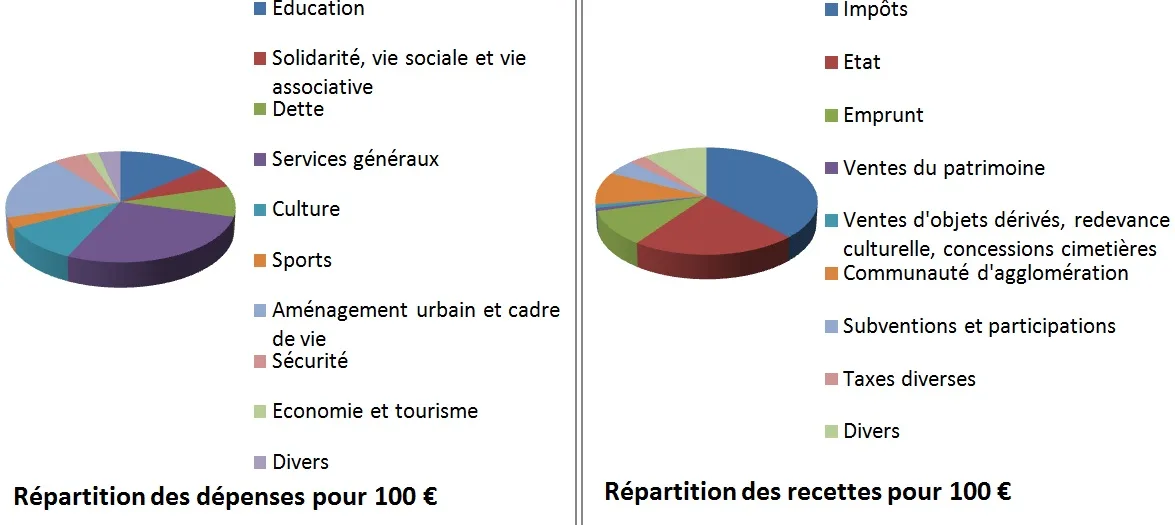
Wraparound programs are rarely funded from a single source. A typical budget blends school district dollars, state grants, federal streams that permit school-based services, philanthropic gifts, and in-kind contributions from partner agencies, whose staff may work on-site at no cost to the school. That patchwork is a strength in good years and a vulnerability in bad ones, because no single line item keeps the coordinator employed.
It also means the programs live or die on local fiscal decisions, which vary enormously even across short distances. Local funding rules differ not just between states but between a county and the city inside it. As a 55places guide to Clermont, Florida, notes, Lake County sets a general operating millage of 5.0254 while the City of Clermont adds its own municipal rate of 4.5900 on top, so the same address can face different total tax burdens depending on which side of a line it sits. A school's community partners draw on that same local tax base, which is why two demographically similar districts can afford very different levels of student support.
For residents trying to follow that money, the practical entry point is the district and municipal budget documents themselves. Our guide to reading a municipal budget walks through the line items where such programs usually hide. We covered a connected angle in How to Read a Municipal Budget: A Resident's Guide to the Line Items.
Where the objections come from
The model has critics, and their arguments deserve a fair hearing.
One concern is mission creep. Schools were built to teach. Adding health care, food distribution, and case management to the school day, critics argue, asks an institution to do work that other parts of the social safety net were designed for, and lets those parts off the hook. The rejoinder from practitioners is blunt: if the other parts are not reaching the child, the argument about whose job it is does not feed anyone.
A second concern is measurement. Programs report outcomes such as attendance, course completion, and graduation, but students selected for intensive support are often selected because they were already struggling, which makes simple before-and-after comparisons flattering. Serious evaluations try to account for this, and district boards reviewing a contract should ask exactly how the provider's reported gains were calculated.
A third is dependency. A program built on one energetic coordinator and one flexible grant can vanish when either leaves. Districts that treat wraparound support as a permanent staffing line, rather than a pilot project, tend to avoid that cliff.
How a community can tell whether its program is real
Because these programs are easy to announce and hard to run, residents and school-board watchers can look for a few concrete signals.
- A named coordinator assigned to a specific building, with a published caseload focus, rather than a district-wide "partnership" title.
- Written agreements with partner agencies that state who does what, on which days, at whose expense.
- Outcome reporting that distinguishes students receiving intensive support from those receiving light-touch services, and that states the comparison method.
- More than one funding source, so the program survives the loss of any single grant.
The same logic applies to community institutions generally: the difference between a program and a press release is usually visible in the staffing and the budget, not the announcement. That distinction recurs across local institutions, from what makes a small town thrive to which taxpayers fund the school budget in the first place. For related coverage, see Communities for People: What Makes a Community Thrive? Lessons From Small Towns.
The takeaway
Communities in schools programs change outcomes, when they do, through an unglamorous mechanism: a person in the building who knows the student, knows the resources, and has the standing to connect the two quickly. The evidence that this mechanism works is strongest where programs are well staffed, honestly measured, and funded by more than one source. Where those conditions are absent, the model still sounds good in a ribbon-cutting speech, and delivers little. The record, where it exists, supports the coordinator, not the slogan.