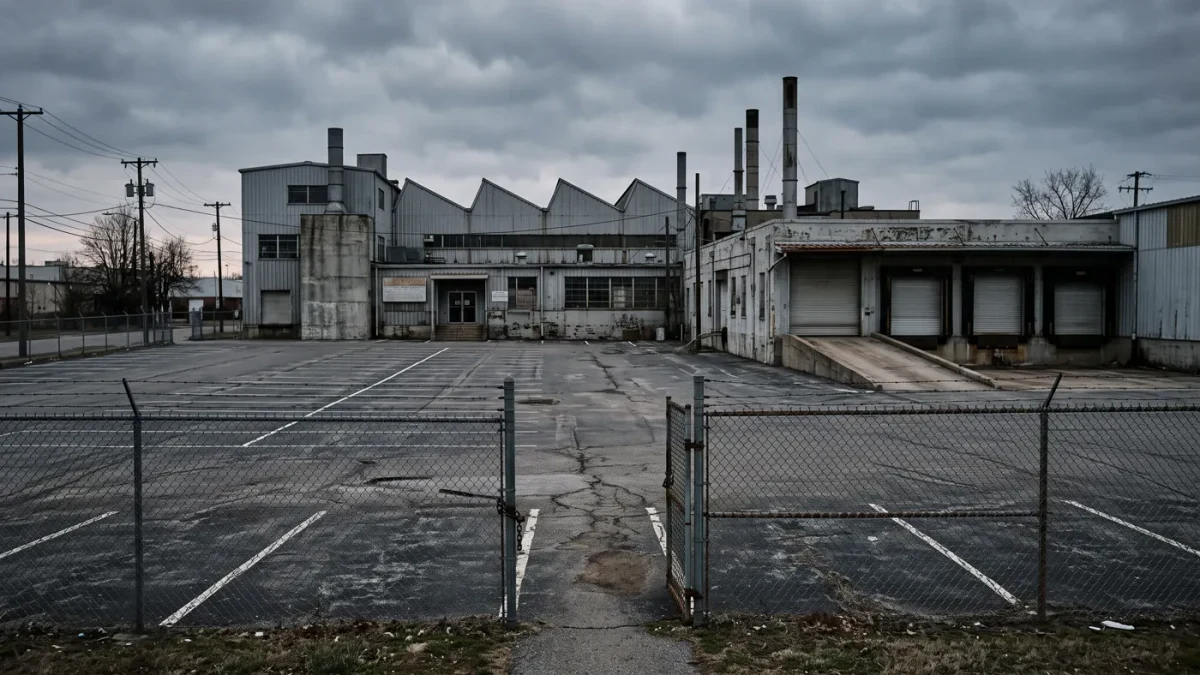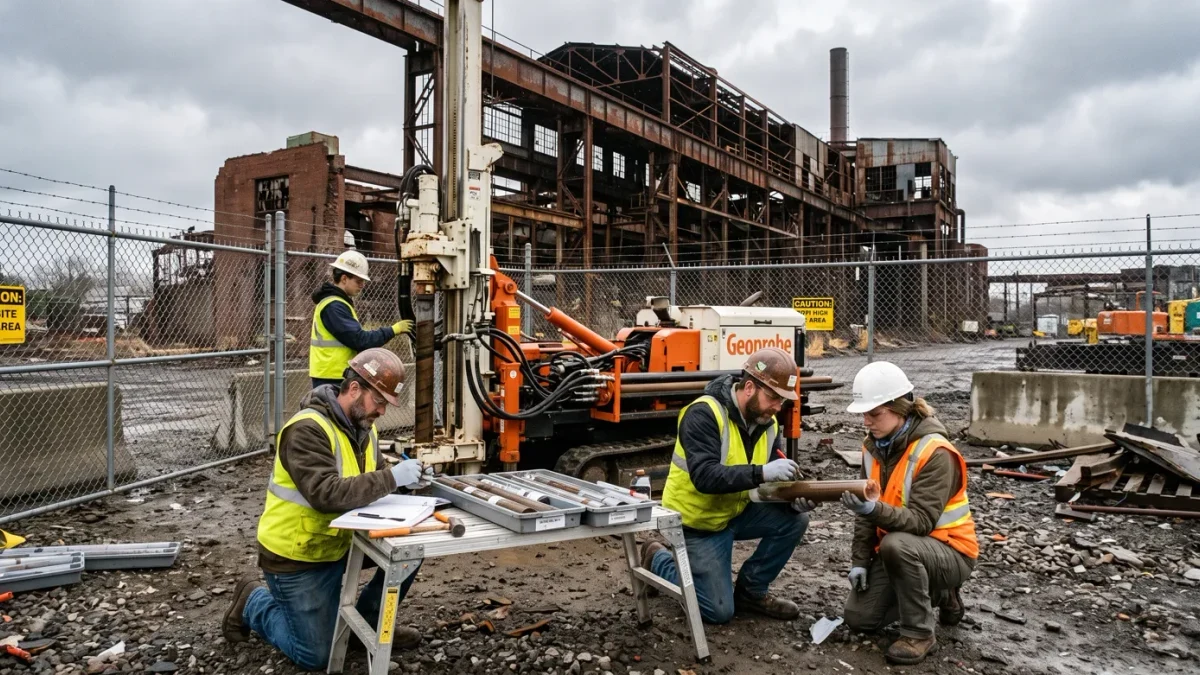
The Environmental Protection Agency estimates more than 450,000 brownfields in the United States: properties where real or perceived contamination complicates redevelopment, old gas stations, closed mills, shuttered dry cleaners, rail yards. They cluster, by the EPA's own mapping, in exactly the legacy industrial cities that need redevelopment most, from the Mon Valley to the Merrimack Valley, and they represent the strange inventory of American decline: land that is worthless not because nobody wants it but because anybody who buys it inherits its legal liability.
Why did brownfields sit empty for decades?
The mechanism was the 1980 Superfund law's liability scheme, which made owners and operators strictly, jointly, and severally liable for cleanup regardless of fault. Applied to idle mills, it produced rational paralysis: banks would not lend, buyers would not close, and cities took title through tax foreclosure and became the liable parties themselves. The documented fix arrived in 2002, when the Small Business Liability Relief and Brownfields Revitalization Act created protections for bona fide prospective purchasers who investigate before buying, and a federal grant program, since expanded in the 2021 infrastructure law to roughly $1.5 billion, that funds assessment and cleanup on sites with moderate, not Superfund-scale, contamination.
What does the redevelopment record show?
The EPA's program tallies are the primary source, and they document thousands of completions with measurable outputs: leveraged private dollars running at multiples of public grant money, tens of thousands of acres made ready, and job creation the agency tracks at completed sites. The academic and planning literature adds texture: brownfield reuse outperforms greenfield development on travel and emissions, since it occupies land already served by infrastructure, and remediated industrial land has become a documented pillar of downtown-adjacent housing production in cities where clean land is scarce. The signature conversions of the era, riverfront mill districts turned to housing and offices in places like Manchester, Pittsburgh, and Richmond's waterfront, were all brownfields programs by another name.
What are the documented caveats?
Four recur. Money leaves first: cleanup grants cover assessment and remediation, but the gap financing that turns a clean site into a building still depends on tax credits and market demand, which is why the strongest outcomes concentrate where housing markets are already warm, and the coldest towns clean sites that remain vacant. Liability tail risk: purchaser protections require diligent compliance, and engineering controls, caps and vapor systems, must be maintained forever by somebody, a maintenance obligation that outlives developers. Environmental-justice inversion: proximity mapping shows brownfields concentrated in low-income and minority neighborhoods, so reuse decisions, distribution centers or parks, are equity decisions, documented in EPA's own EJ screening analyses. And the drum problem: on old industrial sites, unknown buried waste can turn a budgeted cleanup into an open-ended one, the risk that scares private capital most.
What are towns doing that works?
The documented playbook is three moves. Land banking: public or quasi-public authorities assemble and hold title, absorbing the liability no private party will, cleaning with grant funds, and selling clean parcels, a model with named successes in Flint, Cleveland, and Atlanta. State voluntary-cleanup programs, which certify completion and give liability closure, exist in nearly every state and are the quiet legal machinery behind most private deals. And incremental phasing: cleaning the usable acreage first, generating revenue, funding the harder ground later, which the strongest projects document as the difference between a plan and a balance sheet.
What should residents watch?
Watch the reuse, not the ribbon: a cleaned lot that becomes a surface parking dead zone documents cleanup without development. Watch the maintenance obligations on engineered caps, which appear in city records as covenants, and their funding lines, because a cap that is not maintained is a liability returning with interest. And watch the siting fights: when distribution warehouses, the default reuse of the decade, propose onto remediated ground in residential neighborhoods, the meeting minutes document the newest round of an old question, whose land, whose town, whose fumes.