Every major American disaster now produces a second, predictable event: the corporate pledge announcement, tens or hundreds of millions promised within days, stadiums of logos on the relief broadcast. The documented follow-through record, assembled by disaster-philanthropy researchers and investigative tallies of the biggest storms and fires, shows a consistent shape: a large share of announced pledges is real money that arrives, and a documented share is aspiration, in-kind valuation, or matching commitments the public never triggered, a gap that widens precisely when the news cycle moves on and no one is counting.
How do the pledges break down?
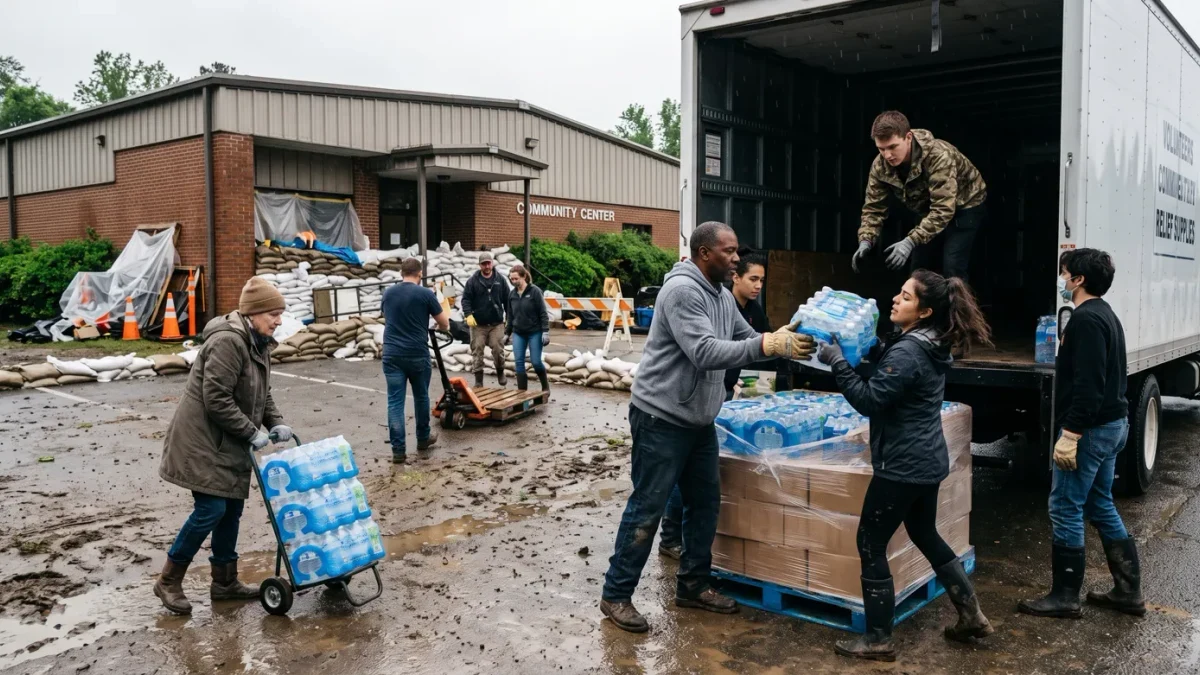
The mechanics matter more than the headline number. Cash grants, the most valuable form, move fastest through established channels, disaster-relief intermediaries and community foundations, and the documented best practice routes them flexibly to local organizations that know the block. In-kind giving, product donations, is legitimately useful, water, generators, medicine, and is also the documented site of valuation inflation, product booked at retail rather than cost, marketing-aligned inventory offloaded as charity. Employee-match programs depend on employee uptake, and matching pledges with caps sound larger than they pay. The accounting category matters too: corporate-foundation grants are traceable in 990 filings; direct corporate gifts often leave no public paper at all, which is where tracking ends and estimation begins.
What does the delivery record show?
The honest findings cut three ways. Speed: cash in the first weeks is worth multiples of cash in year two, the disaster-relief literature's most repeated result, and the companies that pre-positioned relationships with intermediaries, documented in case studies after the major hurricanes, delivered fastest. Equity: research on disaster giving, including analyses of philanthropic flows after recent hurricane seasons, documents that high-visibility disasters attract multiples of the giving that slower, poorer-region disasters receive, and that within one disaster, the documented flows favor visible relief over unglamorous recovery, mold remediation, case management, rental repair. Persistence: the documented failure mode is the cliff at the one-year mark, when rebuilding, the most expensive phase, begins with corporate attention already spent.
What about the community side of the ledger?
Corporate money is one channel among several, and usually not the largest: federal disaster aid, FEMA and SBA programs, dwarfs private giving, and insurance, where it has not withdrawn, dwarfs both. The corporate role's distinctive value, on the documented record, is flexibility: public programs cannot fund the church kitchen or the small-business bridge loan quickly, and companies, acting locally through employees who live there, can. The best-documented corporate disaster programs treat their own affected workforce as the first relief target, direct grants, job guarantees, rebuilt facilities, with documented retention effects, and their own supply chain as the second, which is where a regional employer's leverage actually sits.
How should a community hold a pledge to account?
The documented tools are simple: ask for the split, cash versus in-kind versus match; ask for the schedule, since a pledge without a date is a sentiment; and route through intermediaries with public reporting, whose disbursement records the community can read. Nonprofit disaster-relief organizations publish their allocations; corporate foundations must eventually file; and the local United Way or community foundation's grant list is the ground truth the press release never footnotes.
What should readers conclude?
Not cynicism, arithmetic. The documented record shows most pledged dollars arriving, some inflated or stalled, and the variable that predicts everything, including speed, equity, and persistence, is whether anyone was still counting after the telethon ended. Generosity is real at the moment of the photograph; accountability is what turns it into roofs, and accountability, in this corner of corporate impact as in every other, has never once arrived uninvited.