American employers run one of the country's largest volunteer workforces, their own staffs, on company time. Corporate volunteer programs, from paid volunteer days to skills-based pro bono engagements, channel a documented billions of dollars in employee hours annually, and nearly every large company reports participation numbers in its impact reporting. The measurement question is newer than the programs: what do the hours actually produce, for the nonprofits, for the communities, and for the companies themselves.
What forms do the programs take?
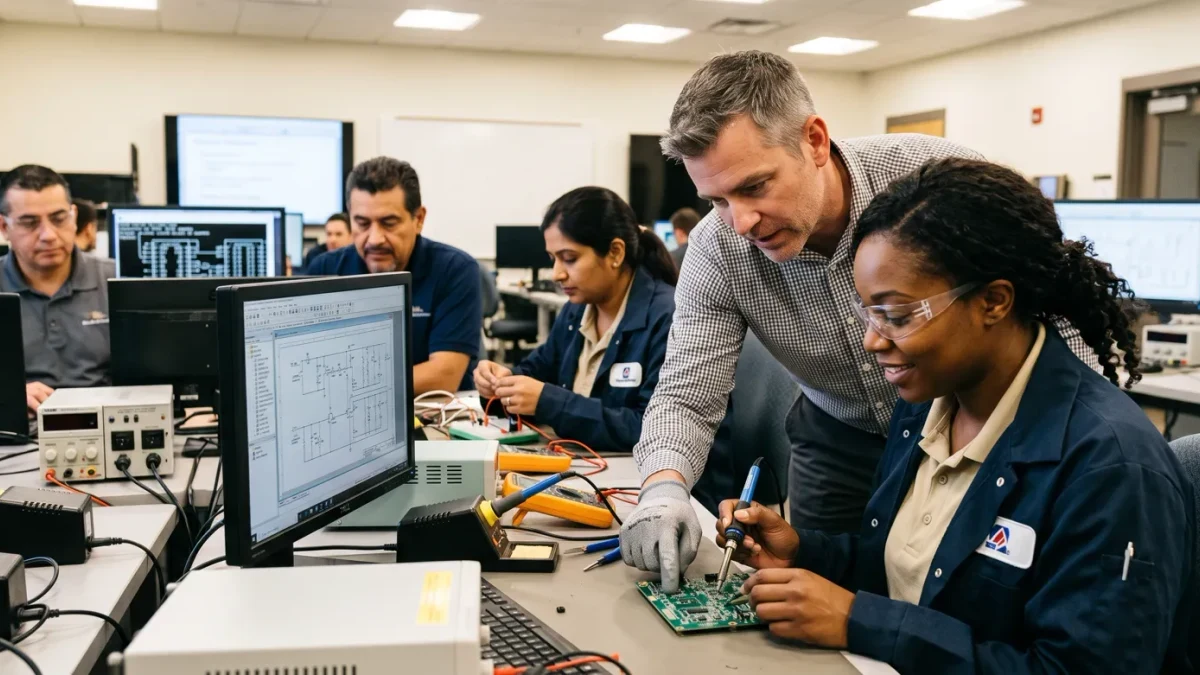
The documented taxonomy has four tiers. Hands-on days, the park cleanup and the Habitat build, high visibility, low skill requirement. Skills-based pro bono, marketing plans for nonprofits, accounting clinics, legal support, code sprints, which the pro bono intermediaries, from Taproot to Catchafire, document as the highest-value hour per hour, with nonprofit-appraised values multiples of general volunteering. Board service, where companies sponsor employees onto nonprofit boards, the deepest commitment and, in governance evaluations, the largest documented leadership-development yield. And disaster response, where corporate logistics, fleet, warehousing, staffing, has documented outsized value in the response literature precisely because the capability is the contribution, not the hours.
What do the evaluations find?
The honest record is mixed in a specific way. Nonprofit-side evaluations document that badly designed corporate days cost more than they give: herding two hundred employees through a food bank for photographs can consume staff time the bank would rather spend packing. The documented best practice, ask first, is a cliché because it is true. Skills-based programs score best in nonprofit appraisals, with completed deliverables nonprofits would otherwise have paid for. Employee-side outcomes are the most robustly documented: participation correlates with engagement, retention, and internal-network breadth in the HR analytics literature, an internal dividend that explains why HR budgets, not foundations, fund most programs. Community-side outcomes, the actual impact on the town, are the least measured tier, a gap the evaluation field itself documents as the sector's blind spot.
When are programs genuinely load-bearing?
The documented cases share a shape. Multi-year partnership rather than annual event: the same company, same nonprofit, cumulative knowledge. Core-capability match: a logistics firm moving food-bank inventory, a software firm building the intake system, documented cases that compound. And employee-led selection, which retention analyses show deepens participation, versus executive-pet causes, which the participation data shows employees politely decline. The best documented corporate volunteer programs look less like charity and more like an off-site capability transfer, with the community as partner rather than backdrop.
What are the critiques?
Three recur in the record. Voluntourism optics, the photographed day that exists for the annual report, which employees see through and participation data reflects. Labor substitution, documented cases where volunteer programs displaced paid nonprofit staff or, domestically contested, unionized municipal work, a tension the labor-relations literature tracks. And the measurement inversion, where programs report inputs, hours served, employees out, rather than outcomes, a practice the impact-accounting standards bodies are documenting and slowly standardizing. The corporate volunteering field is where corporate philanthropy was two decades ago, big, sincere, and only beginning to be counted honestly.
What should an employer or employee take from it?
Employers: measure what the nonprofit received, not what the employees gave, and fund the staff time the hours consume on both ends. Employees: the skills-based route is the highest-yield hour, and the board seat is the one that changes both organizations. Communities: the right ask of a corporate partner is the capability, the trucks, the analysts, the legal hours, not the warm bodies in matching shirts. On the documented record, corporate hours build something exactly when they are treated as work, scoped, skilled, and counted, rather than as a photograph.