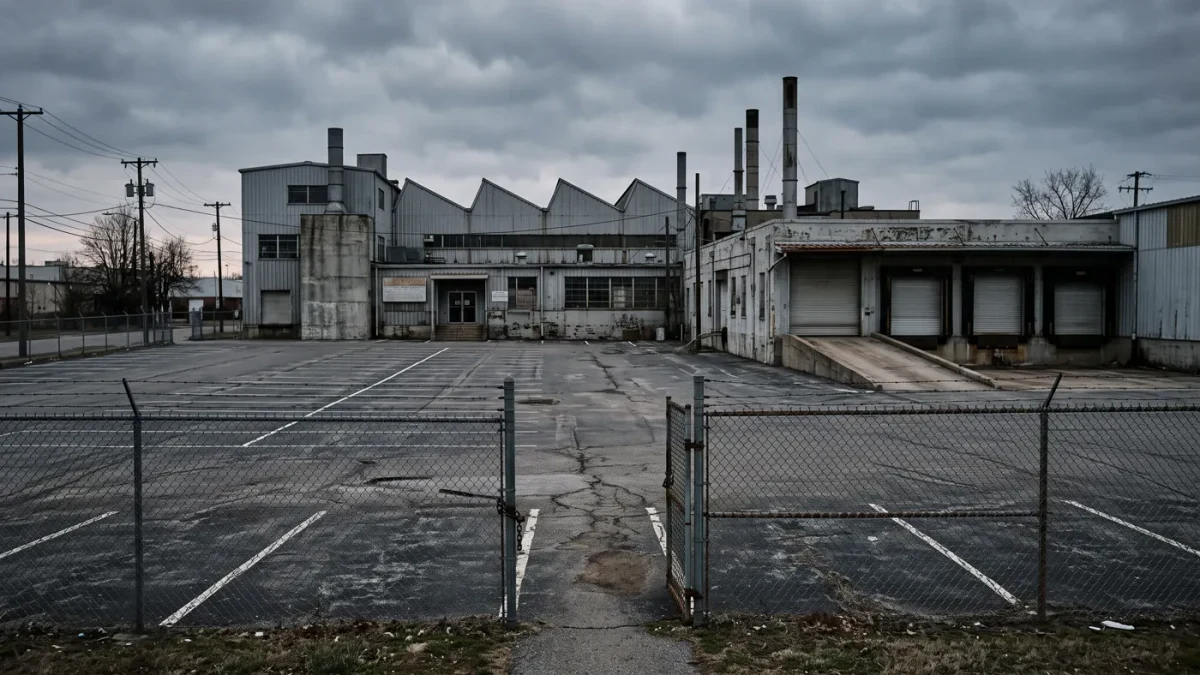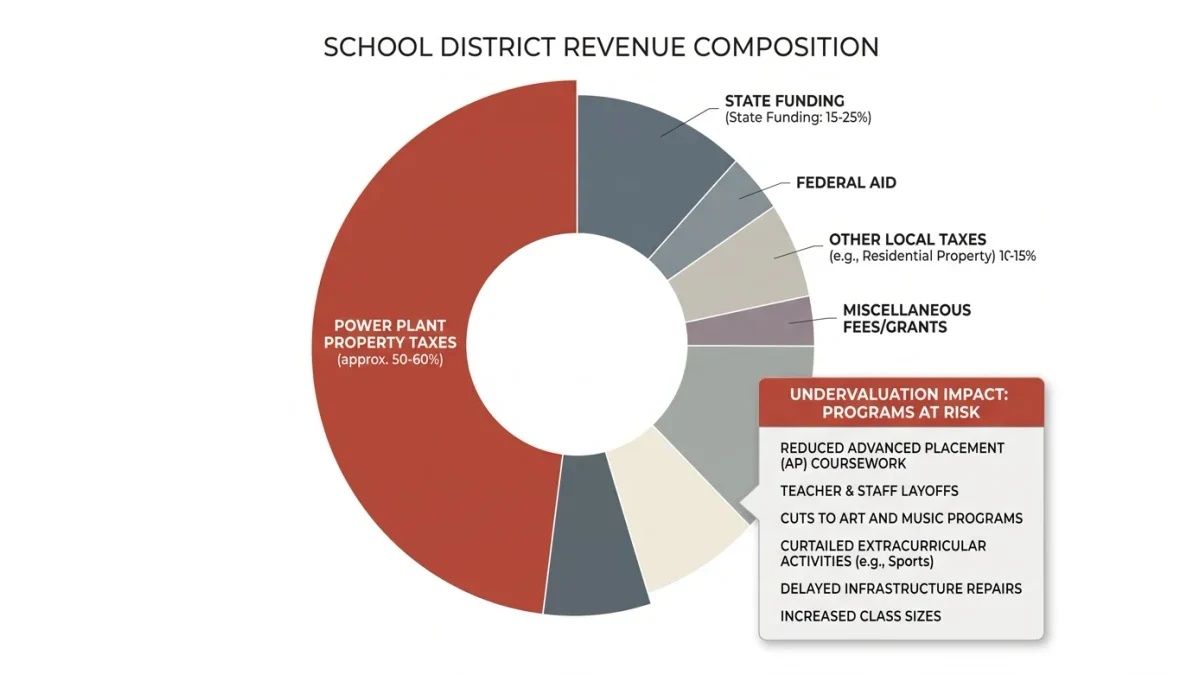
In a large share of American school districts, the largest single property taxpayer is an energy facility: a coal plant, a gas turbine, a nuclear station, a wind farm. Energy-sector analysts and education-finance researchers have documented dozens of districts where a single plant carried a quarter to more than half of local property-tax revenue. As the generation fleet retires coal and builds renewables elsewhere, those districts are living through a documented fiscal experiment in slow motion: what happens to a school system whose taxpayer leaves.
How big is the exposure?
The documented cases run from famous to obscure. The Navajo Nation's experience with coal-plant closures is the largest: the shutdown of the Navajo Generating Station and decline of the Kayenta mine removed the largest non-federal revenue streams from tribal budgets that documented hundreds of jobs and tens of millions in annual revenue. In the eastern interior, school districts in West Virginia, Ohio, Illinois coal counties, and the Powder River Basin of Wyoming have documented revenue declines from retirements and mine closures, with Wyoming's coal-payment collapse, severance-tax freefall documented in state revenue forecasts, forcing the state's first serious school-finance reforms in a generation. The Energy Information Administration's retirement schedule, plus state public-utility commission filings, map the coming decade's exposure.
What actually happens to the district?
The sequence is documented and mechanical. Assessment falls first: a closed plant is scrap value, and valuation appeals by owners of still-running plants, arguing their property is worth less in a decarbonizing market, cut assessments before any closure. Revenue follows: districts document mid-year budget cuts, hiring freezes, and maintenance deferral. Then the students: paradoxically, enrollment often falls faster than revenue in the early years, because plant workers' families leave, which briefly cushions per-pupil figures before the state-aid formulas catch up with reality. The end state, documented in districts from Michigan's Upper Peninsula to the Illinois coal belt, is either state bailout, consolidation with a neighboring district, or permanent austerity: larger classes, thinner electives, deferred roofs.
Do renewables replace the base?
Partly, and the arithmetic matters. Wind and solar projects do pay, and in windy rural counties their payments are now the documented top revenue line, but the comparison is not close per acre: a solar farm's assessed value is a fraction of a coal plant's, because a solar farm has no boiler, no turbine hall, no stacks, a structure that employs dozens rather than hundreds. Studies comparing retirement to replacement, including analyses of the Prairie State and Navajo situations and academic work on energy-community fiscal transitions, find renewables typically replace ten to forty percent of lost property-tax base, a real but structural shortfall, which is why transition assistance programs exist.
What is being done about it?
The documented toolkit is threefold. Federal energy-community bonuses, additional incentive credit for projects sited in coal communities, steer some replacement investment to the exposed counties, with documented take-up through 2024-2025. State severance and replacement funds, Wyoming's school-foundation program and federal abandoned-mine reclamation spending as the historical templates, smooth the cliff over years. And some districts diversified proactively, using plant revenues to pay down bonds and build endowments rather than raising recurring spending, the documented minority practice that looks, in hindsight, like wisdom.
What should residents of an exposed district do?
Read the retirement schedule, not the rumor mill: EIA filings and utility integrated-resource plans name the years. Attend the assessment appeals, where the first battle is fought years before the last shift. And ask the school board the load-bearing question: what percent of our budget is one taxpayer, and what is the plan for the day it is scrap. Communities that asked early kept their schools; the record documents, county by county, what happened to the ones that did not.