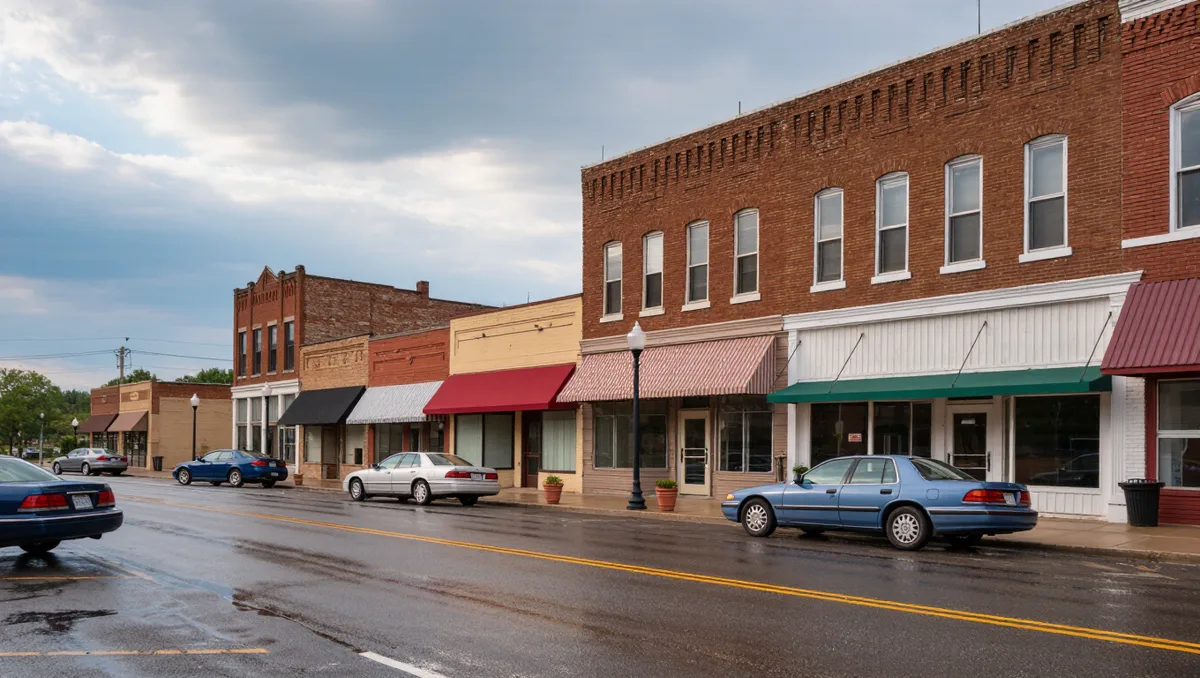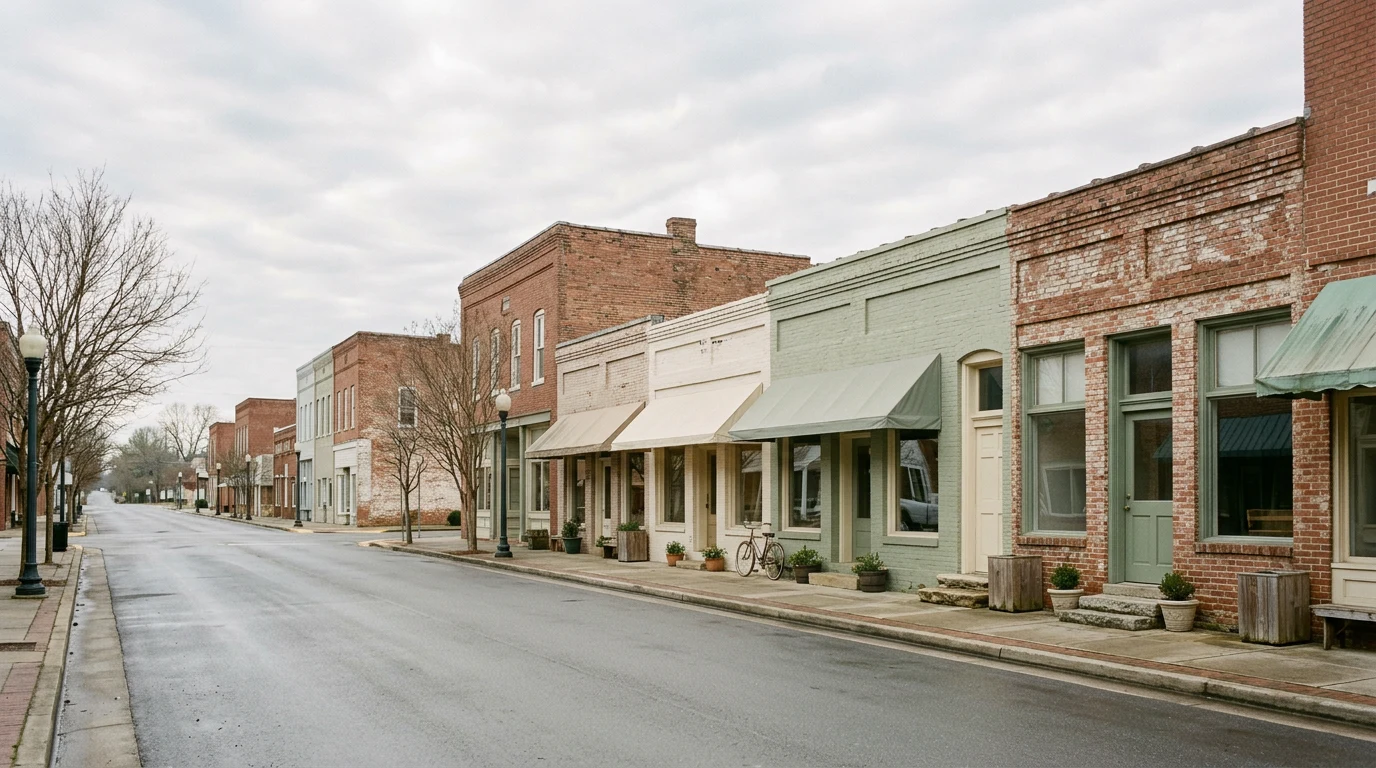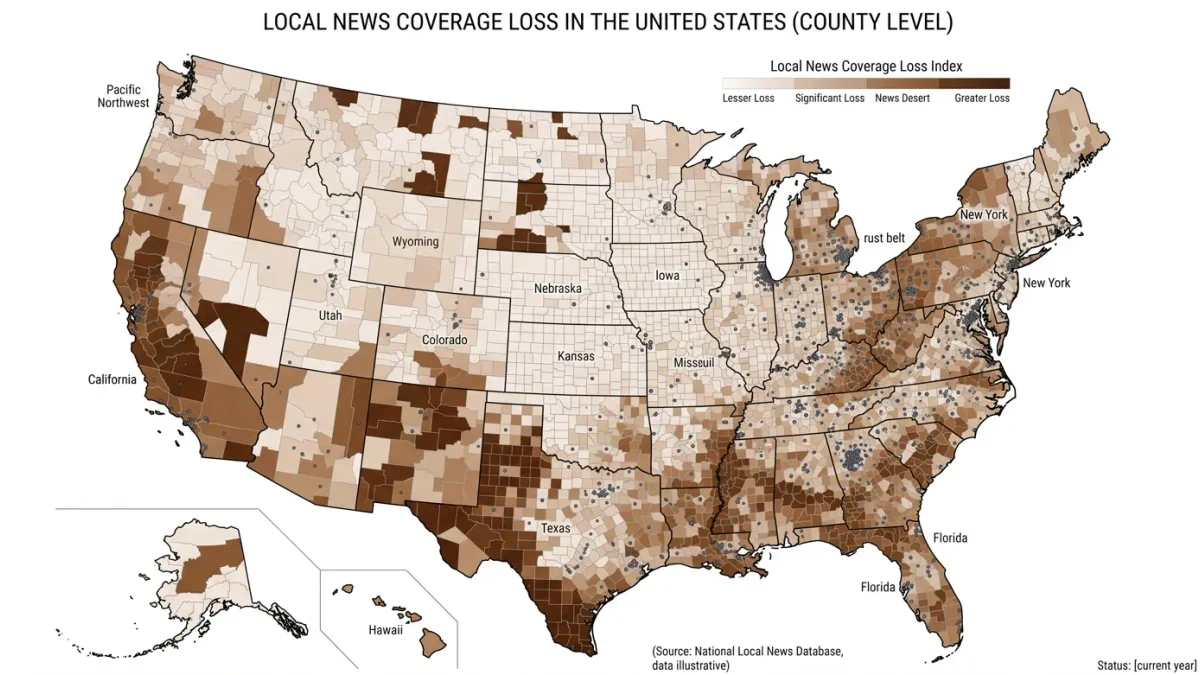
Since 2005, the United States has lost roughly a third of its newspapers, more than two thousand five hundred closures by the counts maintained by Northwestern's Medill State of Local News project, leaving a documented map of news deserts, counties with no local news outlet, and ghost newsrooms, mastheads that no longer field reporters. The count is stark; the economics research that followed is starker, because it documents what the closure costs a county that never subscribed.
What happens to a county that loses its paper?
The documented findings cluster in three literatures. Public finance: the clearest result, from multiple studies comparing municipalities before and after closures, is that government borrowing costs rise, with county and municipal bond spreads widening after paper closures, a finding economists attribute to the watchdog function, local reporters being the auditors who actually read the budget. Governance: closures correlate with documented increases in government wages and staffing, fewer contested municipal elections, and lower voter turnout in local races, a democratic-participation decline measured in the political-science record. And market information: the loss of the local business page documents a measurable chilling of small-business lending and local commerce information flow, the social infrastructure that made a town legible to itself.
Why did the papers close?
The documented cause is a business-model collapse, not a readership verdict. Classified advertising, the historic subsidy, moved to the internet; display advertising followed the audience to platforms; and the private-equity and hedge-fund acquisition wave, the documented MediaNews, Gannett, and Alden Global Capital lineage, stripped newsrooms of assets and staff, running chains for terminal cash flow. The math is mechanical: newsroom employment fell by more than half from its early-2000s peak, documented in Bureau of Labor Statistics data for the newspaper industry, and coverage thins before the masthead dies.
What has replaced the coverage?
The documented substitutes are uneven. Patch-style hyperlocal networks, persistent but shallow. Public media expansion, real but thin on the ground outside metros. Nonprofit newsrooms, the fastest-growing documented model, philanthropy-funded and increasingly professional, though concentrated in cities and state capitals. Facebook groups and message boards, which document the demand, communities posting council minutes and high-school scores themselves, and its limits, no reporter at the zoning board means no record of what was decided. And the documented negative space: pink-slime journalism, sites with algorithmic content and partisan funding dressed as local news, which the academic audits of these networks document as the counterfeit that fills the vacuum.
What are states and philanthropies doing?
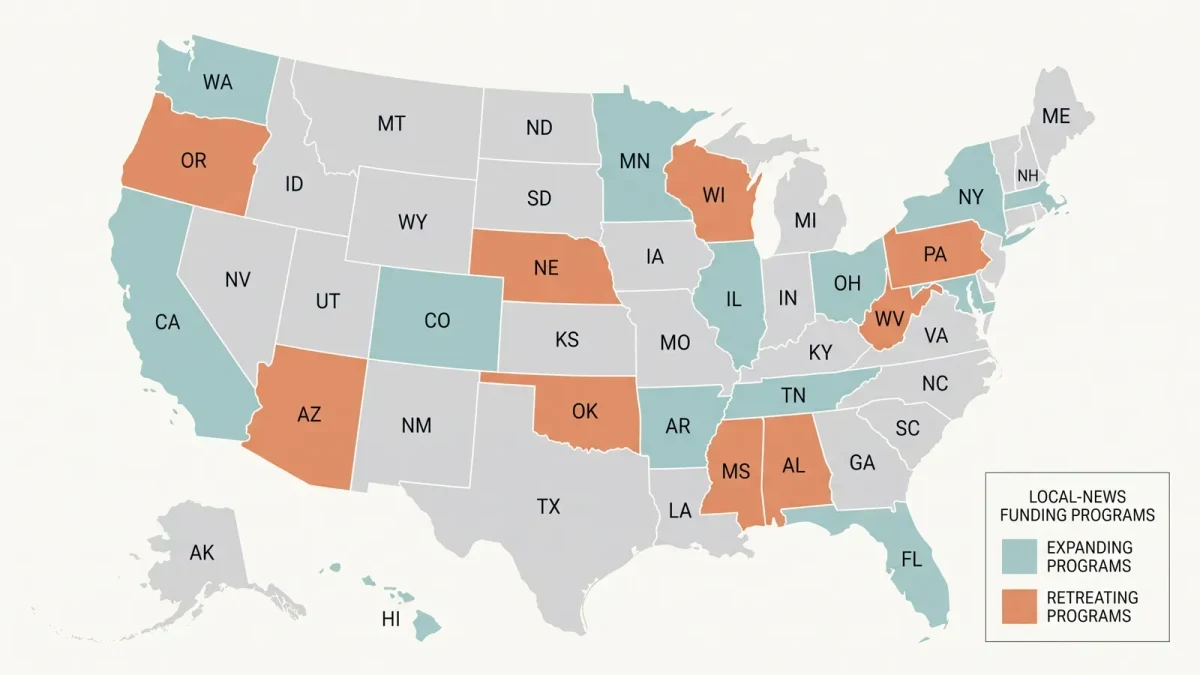
The policy experiments now have records to read. State tax credits, New York, Illinois, and others now subsidize hiring local journalists, an approach documented as the first direct public subsidy of newspaper payroll at scale, with the First Amendment critiques and workarounds, tax credits rather than grants, that the designs reflect. Philanthropy has stepped in where models are nonprofit. Public-notice laws, the requirement that governments publish legal notices in adjudicated newspapers, remain a documented subsidy worth hundreds of millions that the industry defends and open-government groups debate. The early evaluations of the credit programs document newsroom hiring; the long-run civic effects will take years to measure.
Why does this belong to a business-and-society desk?
Because the local paper was, on the documented record, a piece of civic infrastructure the market built and the market unbuilt, and its closure is a business decision whose costs land on people who never bought the product: the bondholder pays a wider spread, the taxpayer pays a less-audited budget, the resident pays for decisions made in unwatched rooms. Journalism's crisis is usually told as a media story. The data reclassifies it as an economic-development story, with the desert on the map where the watchdog used to sit.