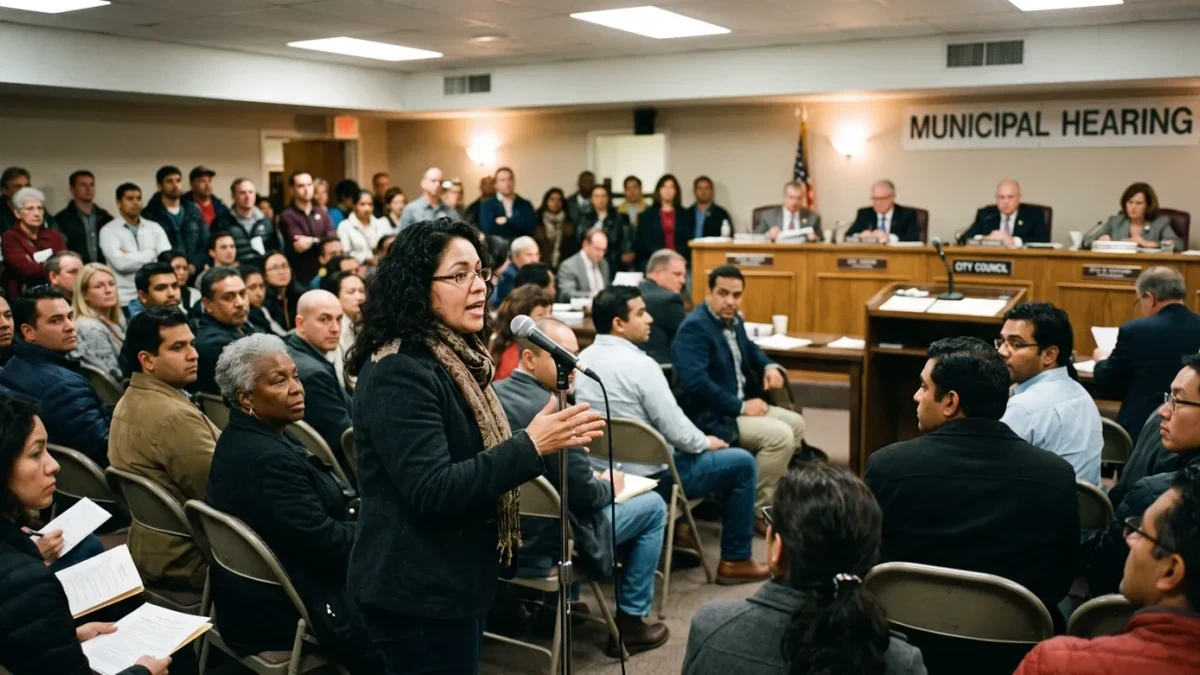
A community benefits agreement is a legally enforceable contract between a developer and a coalition of community organizations, signed before ground breaks, that trades support for a project for specific commitments: local hiring targets, wage floors, affordable housing units, park funding, anti-displacement measures. The tool emerged from Los Angeles in 2001, when negotiators for the Staples Center arena area won what remains the template, and hundreds have followed, attached to stadiums, transit yards, hospitals, and campus expansions across the country. Their documented record is genuinely mixed: a few CBAs have moved real money and changed project design, and many have been decoration that dissolved at signature.
What separates the enforceable from the ceremonial?
The documented pattern is blunt. Agreements that delivered share three features: a community coalition with real leverage, usually the ability to delay approvals or zoning; specific, dated, numeric commitments, forty percent local hiring, a named number of housing units at named income bands, deadlines with clawbacks; and a named enforcement mechanism, typically third-party monitoring with audit rights or the threat the coalition will oppose the next permit. Agreements that failed were signed by organizations the developer selected rather than the ones with standing, contained aspiration language, commit to study, work with good-faith efforts, and had no monitor, no deadline, and no consequence.
Academic and legal reviews, including work collected by the Partnership for Working Families network and law-review analyses of the first two decades of practice, converge on the same findings: enforceability is the whole game, and process matters as much as text. Where negotiations were public and coalitions were representative, even imperfect agreements produced documented community benefits. Where the CBA was negotiated quietly with friendly groups, the signature ceremony was usually the high point.
What do the wins look like?
The strongest documented outcomes cluster in construction and operations economics. Local-hiring and apprenticeship provisions have channeled union construction jobs to residents on stadium and transit projects in Los Angeles, Milwaukee, and Atlanta, with targeted-hire programs at major public agencies, documented in reporting by Bloomberg and local accountability journalism, showing placements into career-track trades. Community workforce agreements on public construction have produced measurable apprentice-completion rates in disadvantaged zip codes. Anti-displacement funds and land trusts won through CBA processes have kept households in place near several major corridor projects, with named dollar amounts and named units.
What are the documented failure modes?
Three recur in the record. Targets without tracking: hiring commitments reported by the developer, unaudited, routinely exceed what payroll records show, and several high-profile stadium CBAs ended with local-hire results far below the promised share. Coalitions that outlived their funding: monitoring is unfunded labor, and agreements whose monitors closed shop delivered whatever the developer volunteered. And the override problem: a CBA binds the developer, not the city, so when projects change hands or municipalities renegotiate subsidies, the community's contract can become a worthless appendix. Some newer agreements answer by routing benefits through development agreements the city itself signs, converting a private promise into a public one.
Why should the average reader care?
Because the money at stake is public. Megaprojects are routinely subsidized with tax increment financing, land writes-down, and infrastructure spending, and the CBA is the community's only seat at the table where those subsidies are priced. The documented comparison is instructive: projects with enforceable agreements returned a measurable share of public value in jobs and housing, while projects with ceremonial ones returned ribbon-cutting quotes. The gap between a contract and a press release, in this corner of civic life, is exactly the gap between a coalition with lawyers and a neighborhood with a flyer.
What should a community ask for first?
The record says: ask for the audit before the amenity. Numeric targets, a funded independent monitor, reporting deadlines, and remedies that survive a change of developer outperform every community room and splash pad in the literature. The first CBA, in Los Angeles, won a living-wage requirement and a hiring hall because the coalition could stop the project. That lesson, documented over twenty-five years, has not changed: leverage first, language second.