Captiva Verde Corp., a developer of atmospheric water technology, is taking its case to a national radio audience. According to Morningstar, the company announced on Nov. 19, 2026, a campaign with Red Apple Media that will carry its message through WABC's more than 700 syndicated network affiliates, following a Veterans Day parade appearance and an on-air interview.
The announcement is a media buy, not a product launch. But it is a useful doorway into a technology that more communities and institutions are likely to hear about: machines that pull moisture out of the air and turn it into drinking water where it is needed. Understanding how that works, and what a company can and cannot promise about it, is the durable part of this story. This connects to our earlier piece, Unemployment Benefits Duration — Unemployment Insurance Week by Week: What a Claim Actually Pays and When It Runs Out.
It is also a reminder of how corporate mission statements reach the public. The pattern — a press release, a broadcast partnership, a quote from an executive chairman — is worth reading with care, the same way any business news deserves a second pass before it is taken at face value. Readers following this should also see How to Read Business News Like an Analyst.
What is atmospheric water generation?
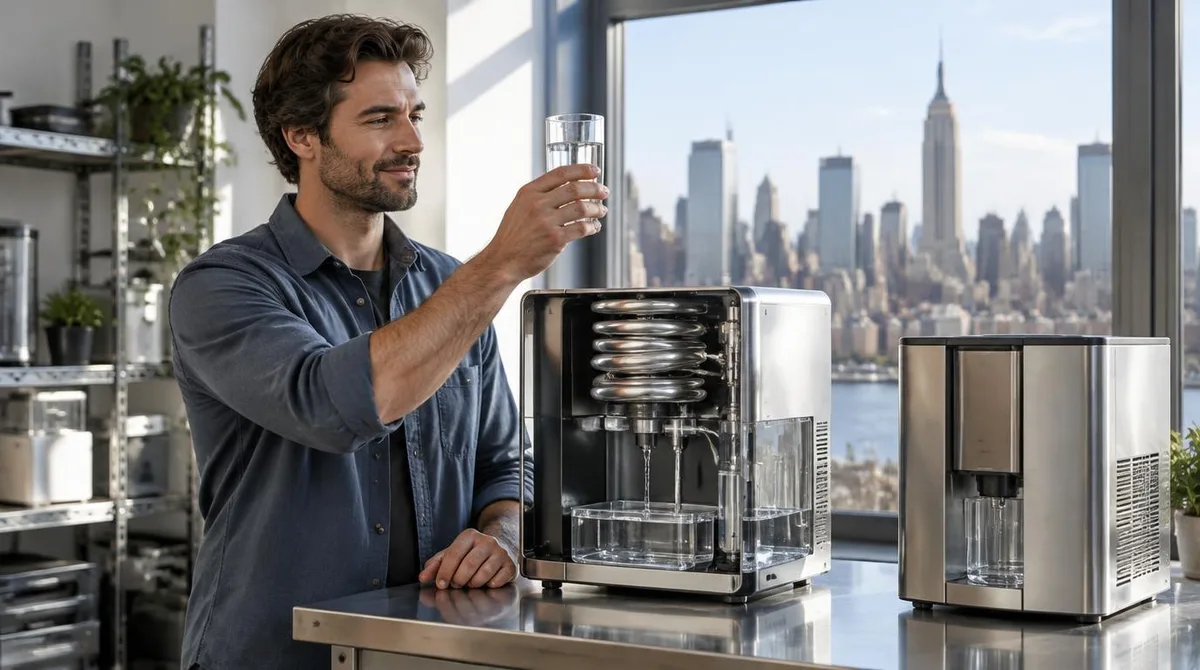
Atmospheric water generation is what the name suggests: technology that draws moisture from the air and turns it into pure drinking water at the point of use. That is how Captiva Verde describes its own technology in its corporate materials, and the description matches the general category. Air always holds some water vapor. A machine built for this purpose captures that vapor and condenses it into liquid water that people can drink, without needing a piped source, a well, or bottled delivery.
The appeal is straightforward. A device that makes water where it is consumed can serve places that lack reliable infrastructure. The company says it works with partners including the military and the hospitality industry, and that its focus spans pure water, wellness, energy reduction and attainable housing. Each of those is a distinct market, and each would test the technology differently.
Why is Captiva Verde buying national radio time?
The campaign has two parts, according to the announcement. First, WABC is airing a series of interviews with Jeff Ciachurski, the company's executive chairman, covering the technology, its military partnerships and its sustainability work. Second, the station is running Health & Wellness and Innovation Reports produced with Yanna Darilis, a journalist-producer, throughout the day across its affiliate network.
"Atmospheric Water Production is transformational to help solve the world's drinking water problems. One cannot speak of the problems of drinking water without a solution. The time is now and we look forward to playing a significant role," Ciachurski said in the announcement. Chad Lopez, president of Red Apple Media and WABC Radio, called the company's work in clean water "revolutionary."
Listeners can hear the programming on WABC 770 AM and online at WABCradio.com. Red Apple Media, owned by businessman John Catsimatidis, operates 77 WABC Radio and Red Apple Audio Networks.
How should a reader weigh a claim like this?
The announcement tells you what the company says about itself and what its broadcast partner says about the arrangement. It does not tell you how much water the technology produces, what it costs to run, or where units are deployed. Those are the questions that matter for any community, base or business actually considering the technology, and none of them is answered by a radio campaign.
That gap is normal in corporate communications, and it is why the useful habit is to read the stated mission alongside the documented outcome. The same discipline applies across corporate responsibility coverage, whether the subject is a responsibility report or a clean-water pledge: the announcement and the record are two different documents, and the second one is the one that counts.
For a small-cap company — Captiva Verde trades on the CSE under the ticker PWR and on OTC Pink as CPIVF — the stakes of that distinction are higher, because the audience for the message includes potential investors as well as potential customers. The company also points to an advisory board of leaders in business, public service and environmental protection as part of its governance. More detail is available at captivaverdeusa.com.
Who might actually use water from air?
The announcement names two audiences that map onto real needs. Communities: places where drinking water infrastructure is absent, strained or compromised can use a point-of-use source that does not depend on pipes. The military: bases, deployments and field operations often need water where no supply line runs, which is why the company's military partnerships feature prominently in its messaging.
The hospitality industry is the third partner the company names, and it fits the same logic — a hotel or resort that can produce drinking water on site reduces its dependence on shipped bottled water. In every case, the practical questions are the same: how much water a unit produces, how much energy it uses to get it, and what the water costs per gallon compared with the alternatives. Those answers come from deployment data, not from a press release.
What happens next
The campaign itself will unfold on air, and its effect is a media question rather than a water question. What would make this story consequential is documentation: named deployments, measured output, and customers who confirm the technology performs as described. Until then, the announcement stands as what it is — a company introducing its mission to a national audience, through a broadcaster paid to carry it. Readers interested in how corporate commitments land on the people they name can follow the communities coverage, where the documented outcome is always the second half of the story.