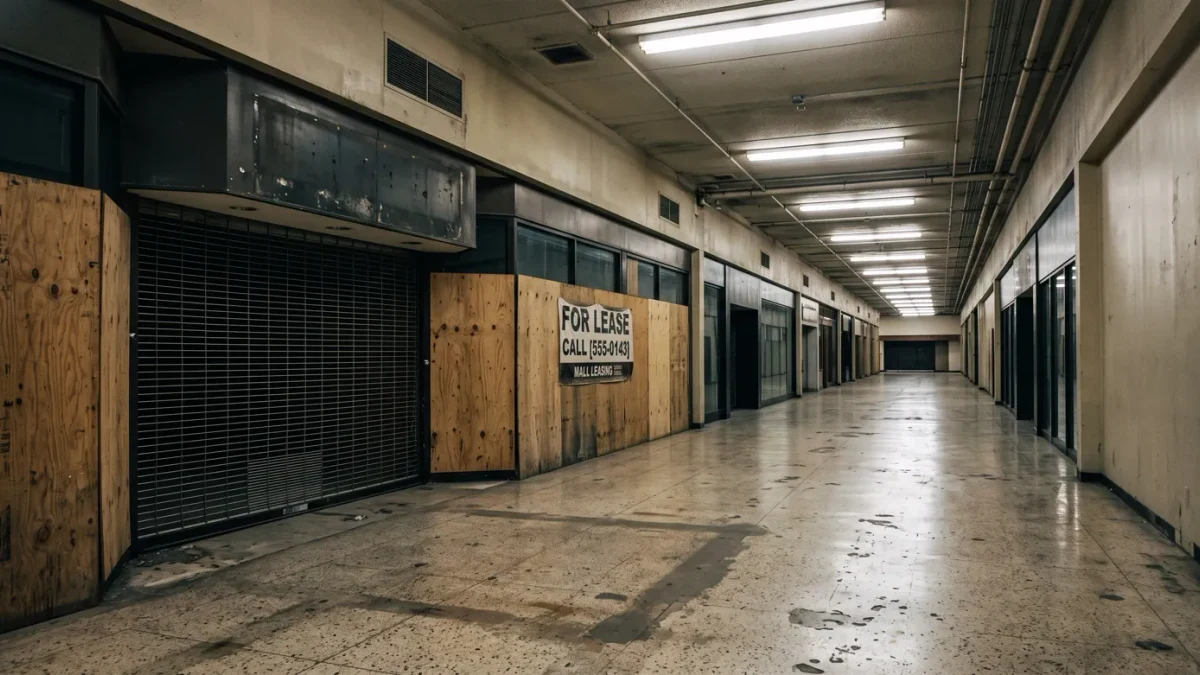
Retail bankruptcies are a scoreboard, and the score has been running against the sector for a decade. After the pandemic-era spike and a brief stimulus-funded pause, Chapter 11 filings by retailers held at elevated levels through 2024 and 2025, tracked by industry monitors and the federal courts' own docket statistics, with the closure schedules filed inside those cases, which stores, which malls, which distribution centers, drawing the map of commercial decline faster than any analyst could. The familiar names on the recent dockets, party-supply chains, drugstore giants, discount apparel, seafood restaurants, and the serial re-filers of the franchise world, make the point that bankruptcy court has become retail's real estate planning department.
What do the dockets show this cycle?
The documented pattern of the 2024-2025 filings differs from the pure apocalypse years in three ways. First, pharmacy and convenience formats closed at strategic scale, with the major drugstore chains executing court-adjacent and out-of-court closure programs in the thousands of stores, citing urban theft headlines and, more substantively in their own filings, reimbursement economics and lease overexposure. Second, private-equity-owned retailers continued to dominate the docket: Shopko, Tuesday Morning, Party City, Big Lots and peers, a lineage scholars of PE retail failures have documented, chains loaded with leverage in the 2010s whose balance sheets had no margin for a rate shock. Third, franchised brands filed at entity level, with restaurant and fitness franchisees using Chapter 11 to reject leases while brands survived, a corporate-structure feature that keeps the sign alive while the local jobs cycle.
What happens inside a retail Chapter 11?
The mechanics matter for workers and towns. Retail debtors file with debtor-in-possession financing and move fast: store-closure motions in the first weeks, lease-rejection auctions, and liquidation sales under court supervision. For landlords, a rejected anchor lease is a documented fiscal event: anchor closures trigger co-tenancy clauses that cut remaining tenants' rent, and appraisals fall with the empty box, a chain that ends in the property-tax appeals that reshape municipal budgets. For workers, WARN notices follow the closure motions, and the documented severance record in liquidations is thin, with claims sold to third parties and paid at cents on the dollar.
Why do the same towns keep taking the hits?
The geography of closures is documented and repetitive. Chains close their lowest-sales-per-square-foot stores, which correlate with the lowest-income trade areas, so each restructuring round removes retail payroll, pharmacy access, and sales-tax base from the same places: small metros and urban corridors already underserved. The pharmacy closures are the sharpest documented case, with researchers and state pharmacy boards mapping the emergence of pharmacy deserts, census tracts, disproportionately Black and rural, where the nearest drugstore is now miles away, an access consequence with documented health effects for chronic-medication adherence.
What fills the boxes?
The reuse record is the sector's quietest success. Dead big boxes have documented second lives as distribution hubs for e-commerce, pickleball complexes, churches, call centers, health clinics, and, the largest category by square footage, grocery-discount and fitness formats. Mall repositioning, documented in the strongest cases, involves demalling, removing the roof, inserting housing and medical offices, an outcome that depends on zoning, which is why the lucky suburbs document years of entitlement work before a crane appears. The unlucky ones document parking-lot prairie.
What should a reader watch?
Watch the first-day filings, where closure lists appear, and the lease-rejection schedules, which name your mall months before the sign comes down. Watch the DIP lenders, because the funds that finance retail distress increasingly also own the real estate, an alignment whose conflicts judges have documented. And watch the workers' claims queue, where the record shows the same thing each cycle: the shelves empty, the brands sell, and the last payday is the smallest line in the docket.