An employee who works from a laptop can create tax obligations in every state the laptop visits. That is the documented reality of multi-state remote work since 2020: state revenue departments, having discovered billions in potential nonresident filings during the telework era, formalized convenience-of-the-employer rules, residency audits, and employer-registration requirements that turn a homesick November in a parent's guest room into a part-year tax return. This analysis maps the terrain; it is information, not tax advice, and individual situations belong with a qualified preparer.
Whose rules govern where you pay?
Two doctrines compete. Physical-presence states tax where work is physically performed, so days worked in a state create income there, pro-rated. Convenience-of-the-employer states, a documented list that includes New York, and by rule or litigation also applies in Pennsylvania, Delaware, Nebraska, and, since 2024, Connecticut in reciprocal cases, tax remote workers based on the employer's location unless the employee works elsewhere for necessity, the employer's, not the employee's. The documented collision: a New Hampshire resident working remotely for a New York firm owes New York tax on those days under the convenience rule, a result Massachusetts also briefly applied to pandemic work until the Supreme Court declined the resulting interstate suit in 2022, leaving the doctrine standing.
What does that mean in filings?
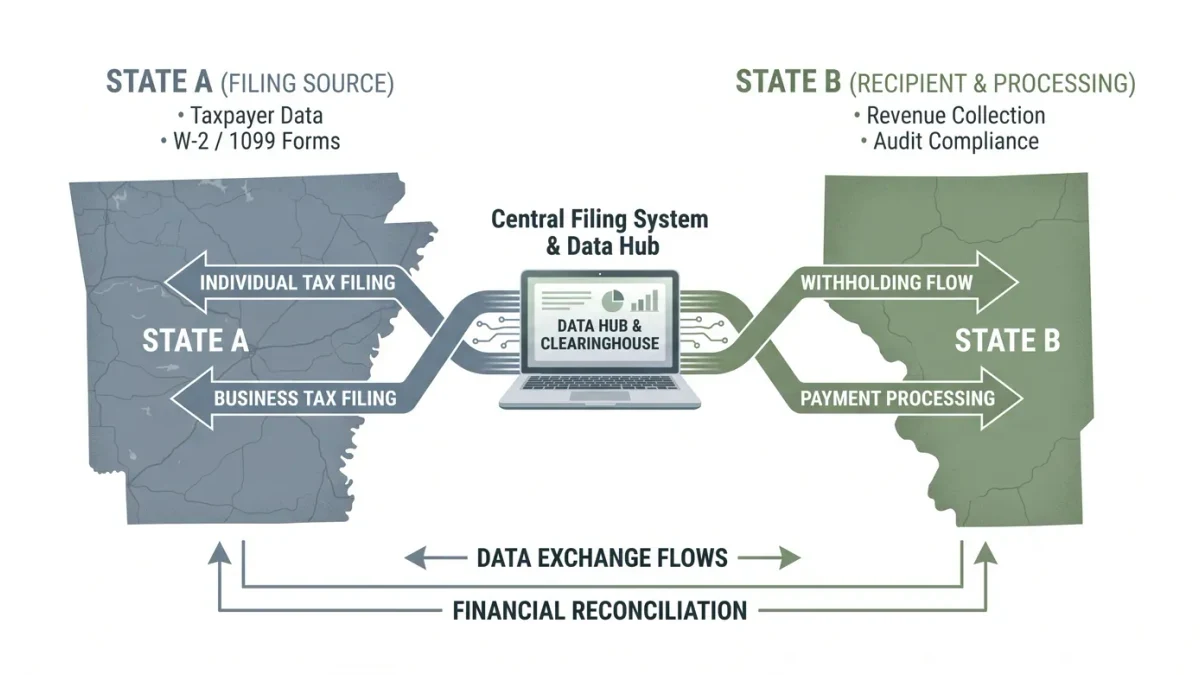
The documented mechanics are credits and returns. A remote worker taxed by two states on the same income files nonresident returns and claims credits at home, which recoup most but rarely all of the double tax, because credit regimes offset only up to the home state's rate. High-tax-state employers of low-tax-state residents are the documented worst case. At the employer's end, withholding follows nexus: an employee working from a new state can obligate the employer to register, withhold, and pay unemployment insurance there, exposure that documented multistate payroll platforms, and the compliance industry that grew around them, exist to manage. Several states maintain day-count thresholds and temporary-allowance windows, fifteen to thirty days in many regimes, documented in each revenue department's guidance.
Where do audits actually happen?
State residency audits are the documented enforcement frontier. New York's tax department runs the highest-profile program, auditing former residents for domicile indicators, the famed five-factor test of home, business ties, time, family, and items near and dear, with documented cases hinging on a dog's veterinarian. California runs aggressive residence and source-income audits on departing tech workers, with a documented collection record that keeps the program funded. And the remote-employee employer registration issue surfaced in guidance from the Multistate Tax Commission and in state amnesty programs offered to employers who had overlooked registrations, an invitation to come clean that documented take-up suggests was widely used.
What are companies doing about it?
The documented corporate responses stratify. Strict geofencing: employment contracts restricting work to listed states, with discipline or termination for violations, the default at compliance-sensitive firms. Employer-of-record platforms, which make the remote hire the vendor's employee for local registration, a booming documented industry. And formal workation policies with day caps and advance approval, the middle path. The tax wedge also documents the remote-work debate's fiscal layer: states like New York gain billions from convenience-rule taxation of nonresident remote workers, numbers documented in revenue estimates, which is precisely why repeal bills, filed repeatedly in Congress as the Multi-State Worker Tax Fairness Act, have not moved: someone's treasury is on the other side of every remote worker.
What should a remote worker actually do?
Four practices from the documented record. Keep a day-location log if you cross state lines, the evidentiary backbone of every audit defense. Check the convenience-rule status of your employer's state before working elsewhere. Alert HR before, not after, relocating, since the registration question is theirs. And in a move year, document domicile breakers, lease terminations, license changes, voter registration, the audit file you build before anyone asks. The remote era promised work from anywhere; the tax system's fine print, documented return by return, answers: from anywhere, with attachments.