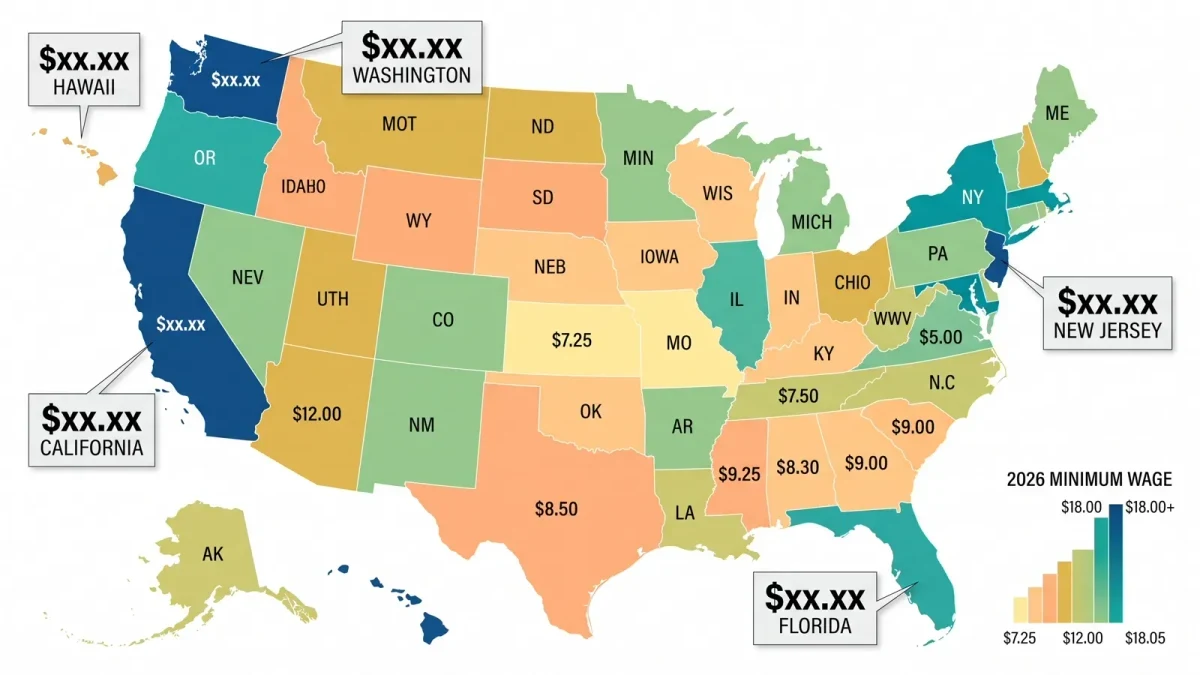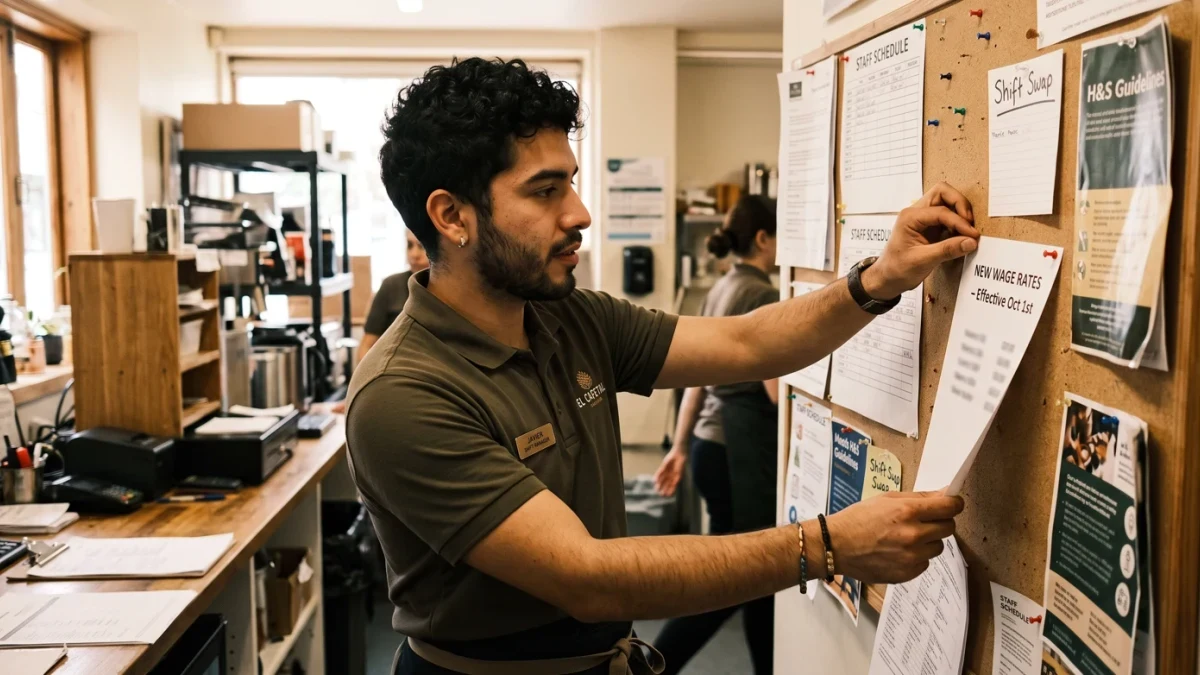
The first paycheck of January is bigger for millions of American workers, and in most cases no politician voted for it. As of January 1, 2026, roughly two dozen states raised their minimum wages under laws that index the rate to inflation or step it up on a fixed schedule. The federal minimum, meanwhile, remained $7.25 an hour, unchanged since July 2009, the longest freeze in the wage's history.
Which workers actually get a raise on January 1?
The raises reach two overlapping groups. The first is workers earning the state floor, concentrated in food service, retail, personal care, and warehousing. The second is larger and less visible: workers earning just above the old floor, whose employers shift the whole pay ladder upward to preserve differentials between new hires and supervisors. Economists documenting this pattern, including researchers at the Economic Policy Institute and academic minimum-wage studies, estimate the spillover typically extends several dollars above the new minimum.
The raise is also uneven by geography. On January 1, states from the West Coast through the Northeast and parts of the Midwest adjust their rates, while most Southern states, where legislatures have not acted, remain tied to the federal $7.25 or have no state minimum at all. The practical consequence, documented in Labor Department wage data, is that the same entry-level job pays materially different amounts depending on which side of a state line it sits on.
Why does the federal minimum never move?
The federal minimum does not expire; it simply requires an act of Congress to change, and the votes have not existed since the 2007 law that set the last series of increases. Proposals to lift it to $15 and index it passed the House in 2021 but failed in the Senate, and subsequent attempts did not advance. Inflation since 2009 has cut the real value of $7.25 by roughly a third, which is why a growing share of the workforce effectively lives under state law instead: by recent counts, 30 states plus the District of Columbia set minimums above the federal floor.
Cities add a third layer. Dozens of municipalities, from Seattle to Flagstaff to local governments in California, enforce their own higher minimums with their own January or July effective dates. Employers in those jurisdictions must pay the highest applicable rate, a compliance rule that small-business owners regularly cite as an administrative burden in surveys by the National Federation of Independent Business.
What do the employment studies actually find?
The research record has narrowed considerably over the past decade. Studies of moderate increases, in the range the states have actually passed, generally find small employment effects, positive earnings gains for low-wage workers, and measurable reductions in poverty among working households. The larger caveats concern big jumps in low-income regions, where a handful of studies have documented hours reductions and concentration of job losses among the least experienced workers. The honest summary of the literature is that the January machine, as designed, moves pay more than it moves headcount, and that effects concentrate where the increase is largest relative to local median wages.
For workers, the documented gains extend beyond the hourly number. Reduced-turnover effects appear repeatedly: when the floor rises, quit rates in affected establishments fall, and employers' posted vacancies shorten. For consumers, several studies attribute part of the cost to modest menu-price increases in food service, typically in the low single digits.
Who is still left at $7.25?
The frozen federal floor matters most in exactly the states that have not acted. Tipped workers face a parallel problem: the federal tipped minimum has been $2.13 since 1991, and where states follow it, tips must make up the difference, a structure enforcement data shows is routinely violated. Domestic workers, farmworkers, and small-firm employees also face longstanding exemptions that keep the effective floor lower than the sticker rate.
What should readers watch in 2026?
Three things. Ballot initiatives, which have produced most of the largest state increases since 2016, continue to be the main route around legislative deadlock. Subminimum-wage reform, particularly for tipped and disabled workers, has advanced in a growing number of statehouses. And the spread of local ordinances means the map redraws itself every January regardless of what Washington does. The wage debate is usually framed as a fight over one number; the system that actually governs American paychecks is closer to fifty numbers, updating on different clocks, with the federal one stopped.