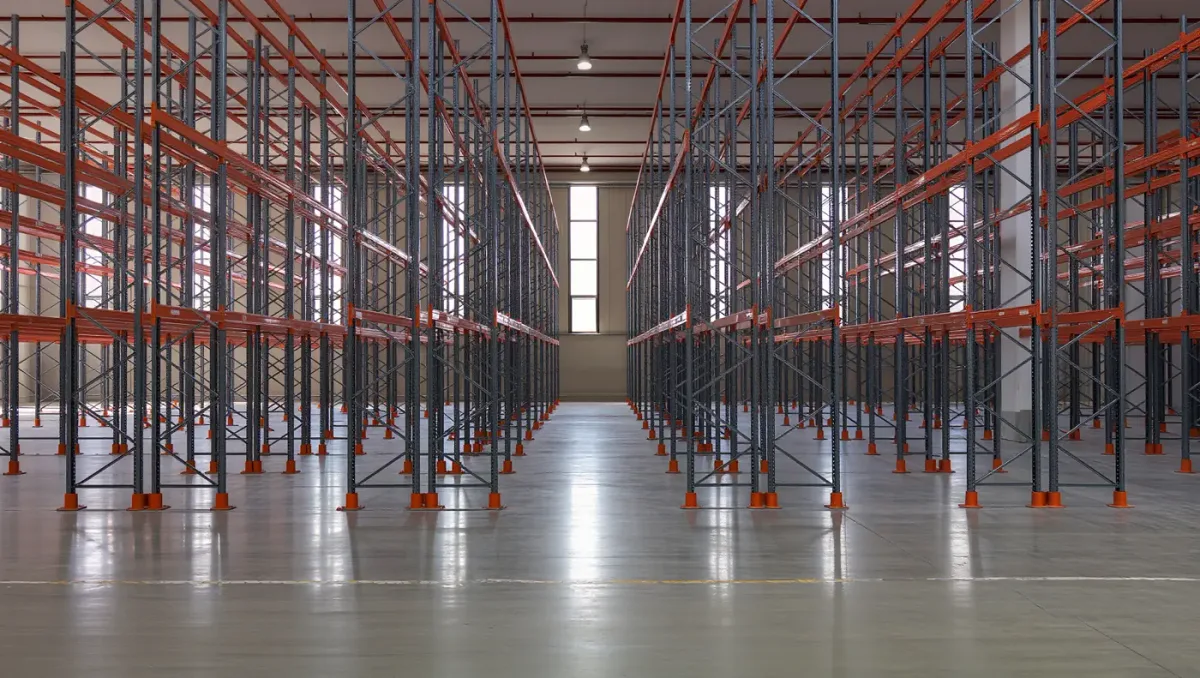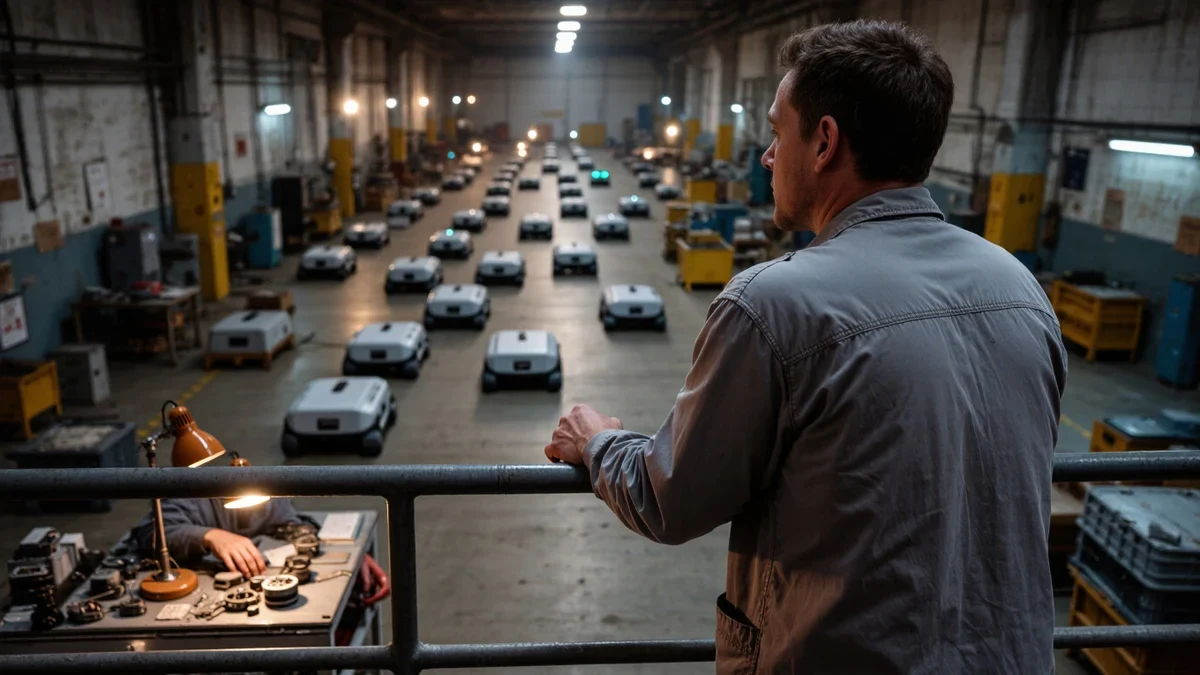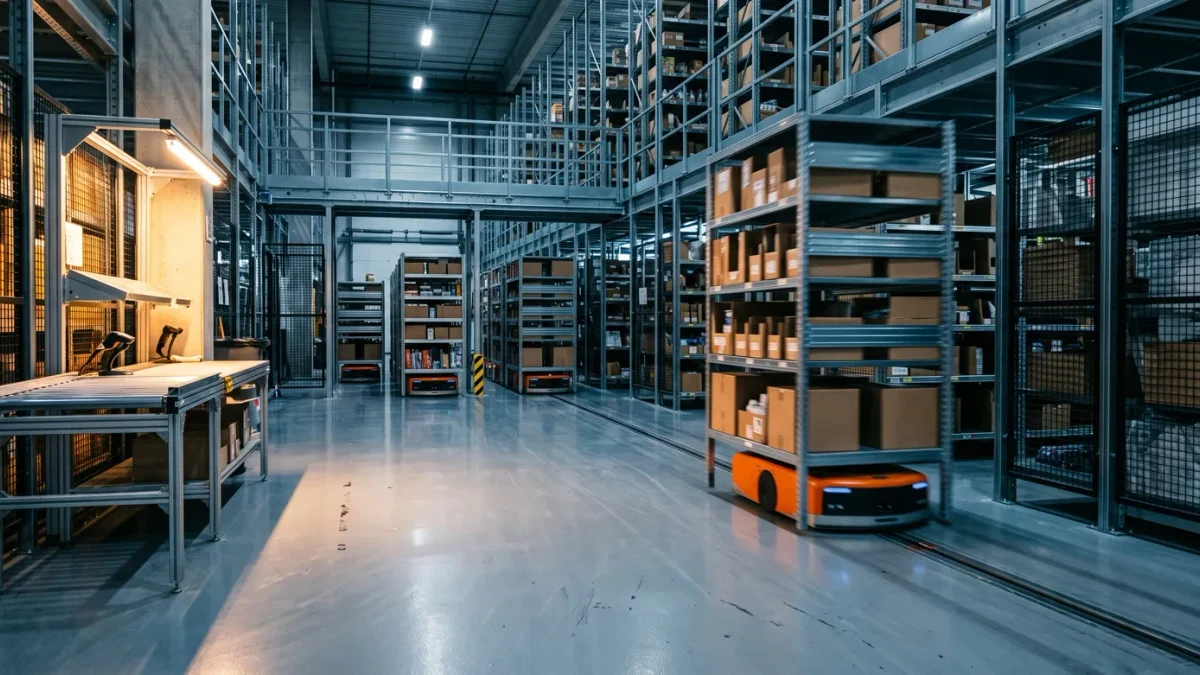
The warehouse is where automation theory meets payroll data, and the meeting is documented. Between 2010 and 2022, American warehousing and storage employment roughly tripled, passing 1.8 million workers, even as the sector deployed robots at scale, an apparent paradox economists resolved neatly: e-commerce demand grew faster than automation ate tasks. Then the lines crossed. Since 2022, warehouse employment has flattened and partially receded while throughput and automation spending kept climbing, a documented inflection the industry's own data now shows, and the economics literature is grading in real time.
What does the research find?
The academic record on warehouse automation is younger than the rhetoric but consistent so far. Task-level studies, including work on Amazon's robotics deployment and the wider logistics-automation literature, document that robots initially complement labor, taking the walking and lifting while humans keep the picking and judgment, raising productivity per worker and, in tight markets, wages. The displacement shows up at the margin and by task: fewer bodies per unit of throughput, fewer entry-level walking roles, more demand for robot technicians and systems operators. Amazon's own disclosures, tens of thousands of deployed robots alongside employment that grew past a million and then stabilized, are the documented test case, and the stabilization is the finding.
Who wins and who loses in the warehouse?
The documented wage structure splits cleanly. Robot-minding roles, maintenance techs, controls engineers, flow planners, pay above the site median, and staffing firms document acute shortages for them. The residual manual roles, quality checks, exception handling, returns processing, cluster at the site's wage floor, often through staffing agencies rather than direct employment, a fissuring the labor-relations literature documents across logistics. The lost roles are the middle, the steady picker who made the site's prevailing wage, and the documented career ladder from entry picker upward thins as the rungs automate.
What about injury and pace?
The health record is part of the employment story. Studies of warehouse injury rates, including state workers'-compensation data and academic analyses of Amazon injury reporting, documented elevated rates in e-commerce fulfillment versus general warehousing, with pace, quotas, and scan-rate tracking implicated. Automation cuts both ways: robots absorb the heaviest lifting, which should cut musculoskeletal injuries, and documented implementations have, while pace-measurement systems raise repetitive strain, the finding in several ergonomic studies. The quit rates, chronically high across the sector, are the labor market's own verdict on the job as designed.
Why are unions suddenly relevant here?
Because automation is now a bargaining subject, not a rumor. The Teamsters' campaign and the first successful Amazon warehouse union election on Staten Island, plus subsequent NLRB proceedings whose outcomes have been contested through 2024-2025, document organizing in precisely the automated sites, and contract language around automation notice, retraining, and displacement pay has entered warehouse agreements, as it long since did in ports and autos. The port-automation fights, documented in the 2024-2025 longshore negotiations, whose tentative agreement included automation restraints and jurisdiction over new technology, preview the template logistics employers and unions will haggle over for a decade.
What should workers and towns watch?
Workers: the credential line, robotics maintenance and controls certifications command documented premiums, and community-college programs co-designed with operators are the documented on-ramp. Towns: the tax and payroll math of the automated warehouse, which brings a building and a smaller permanent payroll than the distribution centers of the 2010s, a fact incentive-agreement negotiations have been slow to price. The paradox era, more robots and more jobs together, was real, and it is documented; the record now begins its second act, where the robots are paid for and the throughput grows without the hiring that used to come with it.